معرفی
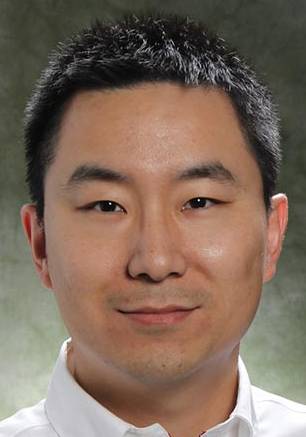
Yu Zhang serves as an Associate Professor in the Department of Computer Science and Engineering within the School of Computing and Augmented Intelligence at Arizona State University. His academic trajectory includes prior roles as a postdoctoral research scholar and research assistant professor at ASU, establishing him as a key contributor to robotics and artificial intelligence research.
Education
- Ph.D. in Computer Science, University of Tennessee, Knoxville
Research Focus
Dr. Zhang's work centers on distributed robot systems, human-robot interaction, and multi-agent planning, with emphasis on human-aware decision-making frameworks. He develops explicable planning methodologies to enhance robot transparency and safety in collaborative environments, exploring implicit communication techniques like virtual shadows to maintain team situation awareness during tacit human-robot interaction.
Publication Trends
Analysis of his 15 most recent publications (2021-2025) reveals a dominant focus on explicable and safe planning for human-robot teams, constituting over 60% of his output. Key innovations include virtual shadow rendering for awareness projection, reward adaptation via Q-manipulation, and grounded language frameworks for robust coordination. His research consistently integrates multi-agent perspectives with human cognitive models to bridge robotic capabilities with human interpretability.
Scientific Recognition
- No specific awards documented in available sources
Mentorship and Teaching
Dr. Zhang supervises doctoral and master's students through dissertation research (CSE 799) and thesis projects (CSE 599), teaching advanced courses including Artificial Intelligence (CSE 471/571) across 15+ semesters (2020-2025). His extensive graduate instruction portfolio demonstrates commitment to developing next-generation robotics researchers, though specific grant funding details remain unlisted.
Research Environment
Based at ASU's Tempe campus, Dr. Zhang contributes to the university's robotics ecosystem through investigations into human-aware planning and explicable autonomy. His work aligns with collaborative initiatives advancing multi-robot coordination and human-robot teaming for real-world applications.