معرفی
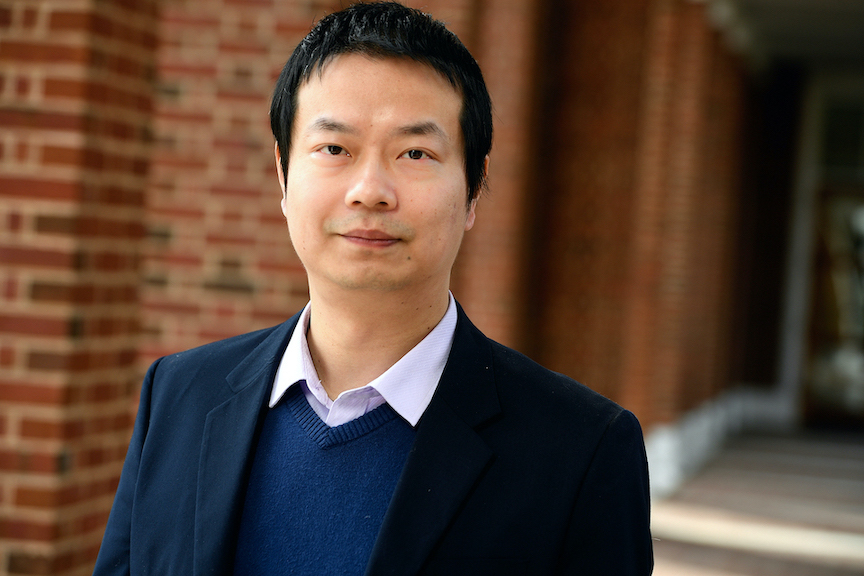
Xin Li is an Associate Professor in the Department of Computer Science at the Whiting School of Engineering, Johns Hopkins University. He is a member of the theory group and conducts research in the theory of computation, with a focus on randomness in computation, complexity theory, coding theory, and cryptography. He has advised several Ph.D. students and is actively involved in organizing seminars and serving on program committees of major theoretical computer science conferences.
- Ph.D., University of Texas at Austin, 2011
- B.S. and M.S., Tsinghua University, Beijing, China
His research interests lie broadly in theoretical computer science, particularly in pseudorandomness, randomness extractors, and explicit combinatorial constructions. He has made significant contributions to the construction of two-source extractors and non-malleable codes. His earlier work includes research in quantum computing and human-computer interaction.
The most recent publications show a strong trend in coding theory (especially insertion-deletion codes), extractors (two-source, affine, non-malleable), and streaming algorithms. His work combines deep combinatorial insights with applications in cryptography and complexity theory.
Scientific Awards and Honors:
- Simons Postdoctoral Fellowship
- NSF CAREER Award CCF-1845349
- Invited to Theory of Computing Special Issue (RANDOM 2018)
- Invited to SICOMP Special Issue (FOCS 2013)
- SICOMP Special Issue (FOCS 2011)
Advising and Grants: Xin Li has advised multiple Ph.D. students including Kuan Cheng, Zhengzhong Jin, Yu Zheng, Songtao Mao, and Yan Zhong. He has served as a postdoctoral mentor and research assistant supervisor. He is supported by several grants including NSF Award CCF-1617713, NSF CAREER Award CCF-1845349, and the Johns Hopkins Catalyst Award. He co-organizes the theory seminar at CS@JHU and has served on the program committees of STOC, RANDOM, and other top conferences.
Labs and Teams: Xin Li is a member of the theory group at the Johns Hopkins Department of Computer Science, which focuses on foundational aspects of computation, algorithms, and complexity.