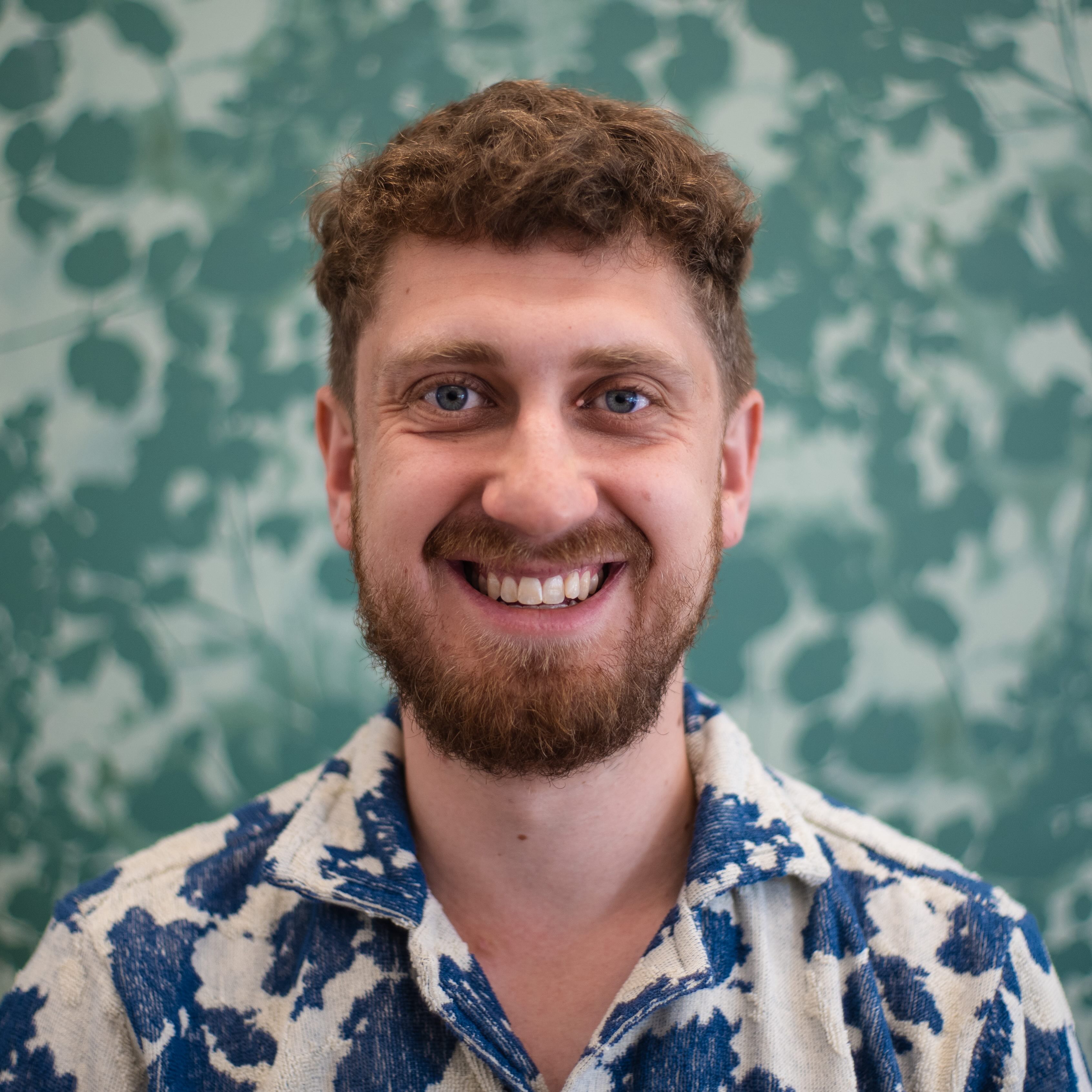
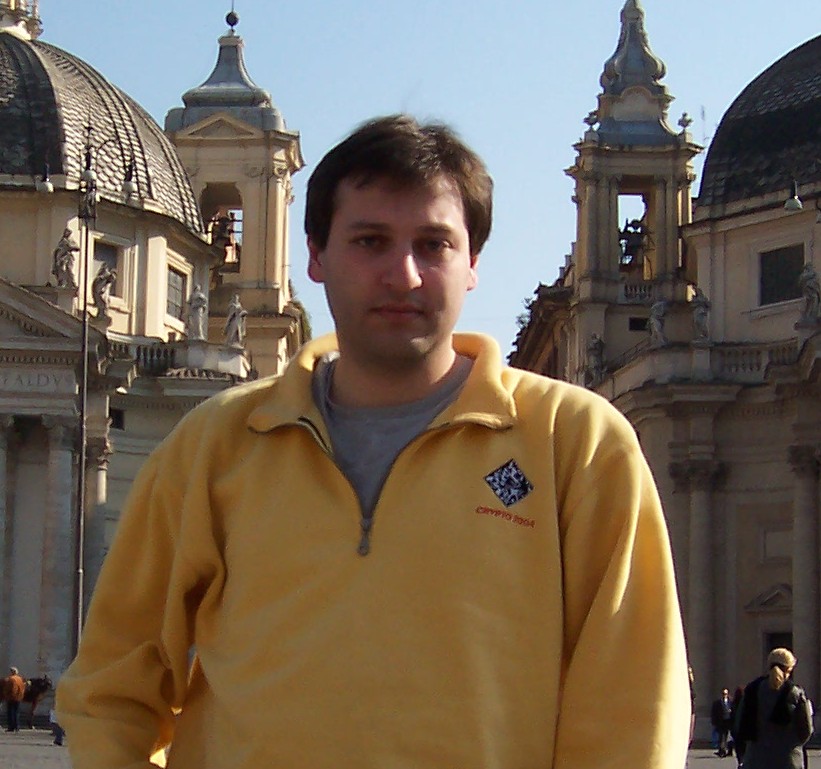
Sebastian Riedel is a Professor at University College London (UCL) and a Researcher at DeepMind, leading the UCL NLP Lab. His work focuses on teaching machines to read, reason, and write, integrating Natural Language Processing (NLP) with Machine Learning. He holds an Allen Distinguished Investigator award and has held roles at FAIR, UMass Amherst, Tokyo University, and the University of Edinburgh. Education: PhD in Computer Science from the University of Edinburgh (advisor: Ewan Klein), postdoctoral research at UMass Amherst (advisor: Andrew McCallum), and research at Tokyo University (advisor: Tsujii Junichi). Research Interests: NLP, machine learning, information extraction, and multimodal models like Gemini. He develops tools such as UCLEED (BioNLP event extractor), frontlets (Scala map wrappers), and thebibbrag (BibTeX to HTML converter). Awards: Allen Distinguished Investigator. Software contributions include GitHub repositories for NLP, machine learning, and data tools. Contact: s.riedel@ucl.ac.uk | Office: 1st Floor, 90 High Holborn, London WC1V 6LJ | Office Hours: Mondays 11 AM–12 PM.
Leonid Reyzin is a Professor and Associate Chair of Academics at Boston University, specializing in cryptography. His research focuses on enabling secure computation, communication, and collaboration in untrusted environments, with contributions to biometric security, cryptographic protocols, and privacy-preserving technologies. He earned his Ph.D. from MIT and has advised on industry standards and received prestigious awards including the NSF CAREER Award and Boston University’s Neu Family Award for Excellence in Teaching. His work spans cryptographic primitives such as fuzzy extractors, verifiable random functions, and proofs of space, addressing challenges like secure key derivation from noisy data and blockchain security. He has collaborated on standards like RFC 9381 and contributed to cryptographic tools for distributed systems and privacy-enhancing technologies. Reyzin’s research emphasizes practical applications, including secure authentication systems, cryptographic protocols for blockchain and distributed ledgers, and mitigating threats like side-channel attacks. His recent work explores advancements in proofs of space, memory-hard functions, and asynchronous authenticated data structures, reflecting a balance between theoretical rigor and real-world applicability. Awards: NSF CAREER Award, Neu Family Award for Excellence in Teaching Key Contributions: Fuzzy extractors, VRFs, cryptographic standards development, blockchain security frameworks Education: Ph.D. in Computer Science, MIT
Yevgeniy Dodis is a Professor of Computer Science at New York University's Courant Institute of Mathematical Sciences. He is a Fellow of the International Association for Cryptologic Research (IACR) and leads research in cryptography and theoretical computer science. Educational Background: Bachelor's degree in Mathematics and Computer Science (summa cum laude) from New York University (1996) PhD in Computer Science from MIT (2000) Professor Dodis specializes in cryptography with particular expertise in leakage-resilient cryptography, random number generation, cryptography with biometrics and other noisy data, hash functions and random oracle model, information-theoretic cryptography, and secure group messaging. His work bridges theoretical computer science with practical cryptographic applications, contributing significantly to the field's understanding of randomness in cryptographic systems. Throughout his career, Professor Dodis has received numerous prestigious awards including the 2021 and 2019 IACR Test of Time Awards for his groundbreaking work on verifiable random functions and fuzzy extractors, respectively. In 2020, he was named an IACR Fellow for his "fundamental contributions to cryptology, especially to cryptographic randomness and symmetric-key primitives, and for service to the IACR". Professor Dodis has advised 14 PhD students to completion, with current advisees including Peter Fenteany and Eli Goldin. He has also mentored numerous postdoctoral researchers throughout his career. He serves as Editor of the Journal of Cryptology and organizes the NYU Cryptography Seminar, fostering academic collaboration in the field. His research group at NYU focuses on advancing cryptographic techniques with practical applications in security and privacy, particularly in areas related to randomness generation and secure communication protocols.
Roel Maes is a Principal Security Architect at Intrinsic-ID B.V. since 2012 and a University Researcher at the Eindhoven University of Technology (ICT Lab) since 2022. He holds an MSc (2007) and PhD (2012) in Electrical Engineering from KU Leuven, where his dissertation focused on Physically Unclonable Functions (PUFs) under the supervision of Prof. Ingrid Verbauwhede.
Akshayaram Srinivasan is an Assistant Professor in the Department of Computer Science at the University of Toronto and the Department of Mathematical and Computational Sciences at the University of Toronto Mississauga. He is a member of the Theory Group, with a focus on foundational cryptography. Previously, he was at the Tata Institute of Fundamental Research (TIFR) and earned his Ph.D. from UC Berkeley under Prof. Sanjam Garg. His research emphasizes Secure Multiparty Computation, Zero-Knowledge Proofs, and Post-Quantum Cryptography. He has received awards such as the Eurocrypt 2018 Best Paper Award and the Google India Research Award (2022). He teaches courses like Cryptography from Lattices and has advised students including Ziyang Jin and Siddharth Agarwal. He serves on program committees for major cryptography conferences and contributes to cryptographic inference systems like Delphi and Muse.
Marius Zimand is a Professor in the Department of Computer and Information Sciences at Towson University. His academic expertise spans computational complexity , algorithmic information theory , and cryptography . Holding Ph.D.s in both Computer Science (University of Rochester) and Mathematics (University of Bucharest), he contributes to the advancement of randomness extraction and theoretical computer science. Education: Ph.D. in Computer Science (University of Rochester), Ph.D. in Mathematics (University of Bucharest) Zimand's research focuses on transforming low-quality randomness into high-quality randomness through efficient algorithms. His work, supported by NSF grants 0634830 (2006-2009) and 1016158 (2010-2014) , explores randomness extractors' applications in cryptography, error-correcting codes, and data structures, with mathematical implications in Kolmogorov complexity and constructive Hausdorff dimension. His recent publications analyze topics such as time-bounded Kolmogorov complexity , dynamic matching in expanders , and universal coding theorems , reflecting a consistent emphasis on randomness extraction and complexity theory. Awards include Best Paper at CSR'2008 and Best Paper at ICALP 2005, Track C . Professional Service: Editorial Board Member of Journal of Universal Computer Science Grant Reviewer for NSF, National Research Council Canada, ANR France, and US-Israel BSF Zimand's contributions to theoretical computer science bridge mathematical rigor with practical applications, maintaining active research and service roles within the academic community.
Cody Freitag serves as a Postdoctoral Researcher at Northeastern University's Khoury College of Computer Sciences, hosted by Professor Daniel Wichs, with concurrent affiliation at Hebrew University of Jerusalem under Professor Ilan Komargodski. His research centers on cryptographic proofs and their applications to decentralization in distributed computing systems. His academic journey includes: PhD in Computer Science from Cornell University (Cornell Tech campus) in 2023, supervised by Rafael Pass Undergraduate degree from The University of Texas at Austin Pre-university studies at the Texas Academy of Math and Science Dr. Freitag's research spans theoretical cryptography with emphasis on zero-knowledge systems, cryptographic protocol design, and security foundations for decentralized environments. His work bridges computational complexity theory with practical implementations in blockchain and distributed systems, particularly focusing on proof systems, time-based cryptography, and secure multi-party computation. Current investigations examine the interplay between cryptographic assumptions and real-world system security. Recent publications reveal consistent innovation in advanced cryptographic primitives, with notable concentration on succinct non-interactive arguments (SNARGs), witness encryption, and verifiable delay functions. His research demonstrates particular expertise in leveraging lattice-based assumptions (LWE) to construct efficient protocols while maintaining rigorous security proofs, with increasing applications in decentralized finance and blockchain infrastructure. His scientific recognition includes: Khoury College Distinguished Postdoctoral Fellowship NSF Graduate Research Fellowship Supported by these prestigious awards, Dr. Freitag maintains active research collaborations across institutions while advancing foundational work in cryptographic theory. His current projects focus on optimizing cryptographic proofs for distributed environments and enhancing security models for decentralized applications. He participates in the cryptography research ecosystem through Northeastern's Khoury College group and Hebrew University collaborations, contributing to the Information-Theoretic Cryptography conference series and advancing theoretical frameworks for next-generation secure systems.
V. Arvind is a Professor in the Theoretical Computer Science faculty at the Institute of Mathematical Sciences (IMSc) , Chennai. His research is centered on computational complexity theory, with a focus on structural complexity, randomized and algebraic computation, and quantum information and computation. He explores the deep connections between theoretical computer science and mathematics. Institution: Institute of Mathematical Sciences (IMSc), Chennai School: Theoretical Computer Science Academic Rank: Professor Arvind's research interests include computational complexity, structural complexity theory, algebraic computation, derandomization, and quantum computing. He is particularly interested in the interplay between mathematical structures and computation. His work often bridges theoretical computer science with algebra, combinatorics, and logic. His recent publications, primarily expository articles in the EATCS Bulletin’s Computational Complexity Column, cover a wide range of topics such as robust oracle machines, the Alon-Roichman theorem, noncommutative arithmetic circuits, graph isomorphism, and quantum computation. These works reflect trends in foundational complexity theory, algebraic methods in computation, and the exploration of quantum models. The articles emphasize structural insights, lower bounds, and connections to mathematical disciplines. Professional Service and Editorial Roles: Associate Editor, ACM Transactions on Computation Theory Editor, EATCS Computational Complexity Column (since June 2011) Editorial Board Member, International Journal of Computer Mathematics (2009–2013) Co-organizer, ICM Satellite Conference on Algebraic and Probabilistic Aspects of Combinatorics and Computing Program Committee Member for WALCOM 2014, STACS 2012, COCOON 2009, FSTTCS (multiple years, including chair roles), CCC 2006, INDOCRYPT (2002, 2005), and others Teaching: Arvind has taught advanced courses including Computational Complexity, Algorithms, Algebra and Computation, and Discrete Mathematics, often based on foundational texts and notes from leading experts. Lecture notes from his courses have been compiled by students and collaborators. Collaborations: He has an extensive list of co-authors, including prominent researchers such as Manindra Agrawal, Eric Allender, Johannes Köbler, Meena Mahajan, Jacobo Torán, and Ramprasad Saptharishi, indicating strong collaborative research networks in complexity theory and algorithms.
Dr. Alexander R. Block is an Assistant Professor at the University of Illinois at Chicago (UIC) , specializing in Cryptography and Coding Theory . He focuses on the concrete security and space-efficiency of SNARKs, error-correcting codes , and locally decodable codes . Before UIC, he was a postdoctoral researcher at Georgetown University and University of Maryland , advised by Justin Thaler and Jonathan Katz. His PhD from Purdue University (2022) was supervised by Jeremiah Blocki. His research bridges theoretical and applied aspects, including field-agnostic SNARKs (CRYPTO 2024) with expand-accumulate codes, Fiat-Shamir security analysis of FRI protocols (ASIACRYPT 2023), and memory-hard puzzles in the standard model (SCN 2022). He has contributed to insertion-deletion error codes (CCC 2023) and secure computation with leaky correlations (TCC 2018, CRYPTO 2017). Dr. Block has received multiple scientific awards , including the Emil Stefanov Fellowship (2021) and Purdue Three Minute Thesis Competition Finalist (2022). His teaching includes courses like UIC's CS 505 - Computability and Complexity Theory (Spring 2025), where he emphasizes interactive proofs and zero-knowledge systems . He actively serves on program committees for CRYPTO , EUROCRYPT , and ZKProof Workshop , and has reviewed for leading journals and conferences.
Russell Impagliazzo is a Professor in the Department of Computer Science and Engineering at the University of California, San Diego (UCSD). He has held positions as Assistant Professor, Associate Professor, and Professor at UCSD since 1991 and was a Visiting Professor at the Institute for Advanced Study (Princeton) from 2007 to 2012. His academic journey includes a BA in Mathematics from Wesleyan University and a PhD in Mathematics from UC Berkeley. His research focuses on computational complexity theory , with key contributions to: Randomness in computation Cryptography (e.g., pseudorandom generators) Circuit lower bounds Proof complexity (e.g., polynomial calculus, resolution) Structural complexity (e.g., average-case hardness) Optimization heuristics (e.g., local search) The trends in his publications include foundational work on derandomization, hardness amplification, and algebraic proof systems. His papers often bridge theoretical computer science with mathematics, particularly in analyzing the limits of computational models. Scientific awards and honors include: NSF Young Investigator Sloan Fellow Fulbright Scholar Guggenheim Fellow Simons Investigator Best Paper Award (Computational Complexity Conference) Best Paper Award (STOC) Outstanding Paper Award (SIAM) He actively advises students and has contributed to grants and programs such as the Simons Institute’s Fine-Grained Complexity and Algorithms and the Meta-Complexity program at the Simons Lab in Spring 2023.
Mark Braverman is a Professor at Princeton University, known for his contributions to theoretical computer science, computational complexity, and information theory. He holds a PhD from the University of Toronto (2008), where his dissertation focused on computability and complexity of Julia sets. His research spans a wide range of topics including interactive communication protocols, pseudorandomness, distributed computing, algorithmic game theory, and quantum computing. Key areas of focus include developing error-correcting codes for interactive communication, establishing lower bounds in computational complexity, and exploring the interplay between information theory and algorithm design. Braverman has co-authored over 240 publications and has collaborated extensively with researchers such as Klim Efremenko, Anup Rao, and Omri Weinstein. His work has been recognized through prestigious venues like STOC, FOCS, and SODA, and has addressed foundational questions in theoretical computer science, including the limits of parallel repetition in games and the design of resilient computational systems. Recent research highlights include advancements in quantum communication complexity, fault-tolerant circuit design, and algorithmic approaches to matching markets. His interdisciplinary work bridges mathematical theory with practical applications in distributed systems and economics. Braverman also contributes to the academic community through editorial roles and conference organization, furthering the development of computational theory and its applications.
Yevgeniy Dodis is a Professor at the Courant Institute of Mathematical Sciences , part of New York University , where he leads the Cryptography Group . He is an IACR Fellow (2020) and specializes in Cryptography, particularly focusing on leakage-resilient systems, random number generation, and secure messaging protocols. His research also extends to theoretical computer science areas like algorithms and complexity. He has advised over 14 PhD students and 8 postdoctoral researchers, with current students including Peter Fenteany and Eli Goldin. His professional activities include editing the Journal of Cryptology , organizing conferences like TCC and CRYPTO, and contributing to cryptographic standards like the Signal Protocol implementations. Notable awards include the 2021 IACR Test of Time Award for work on verifiable random functions and the 2019 Test of Time Award for fuzzy extractors. His research has been highlighted in media such as Science Goes to the Movies and DIGITALAX Magazine .
Samantha Wittke is a Doctoral Researcher and Visitor in the Department of Built Environment at the School of Engineering, focusing on Geoinformatics and Remote Sensing. She holds a Master's degree in Engineering and Technology from HafenCity Universität Hamburg (2017). Her research emphasizes sustainable development goals, particularly in environmental monitoring and agricultural technology. Research Interests: Wittke's work revolves around remote sensing applications, including time series analysis of satellite data (e.g., Sentinel-2) and terrestrial laser scanning. Key areas include boreal forest ecology, crop yield prediction, and environmental data extraction. Her contributions align with UN Sustainable Development Goals related to sustainable agriculture and climate action. Collaborations & Projects: She collaborates on initiatives like EODIE (Earth Observation Data Information Extractor) and LiPheStream, contributing to datasets such as LiPheKit and carpentries-incubator/deep-learning-intro. These projects highlight her expertise in geospatial data management and software development.
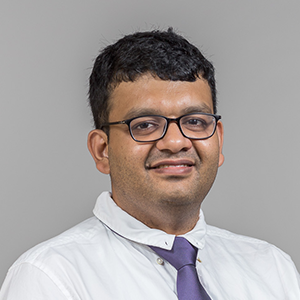
Divesh Aggarwal is an Associate Professor in the Department of Computer Science at the National University of Singapore (NUS) and a Principal Investigator at the Centre for Quantum Technologies (CQT). He holds a PhD from ETH Zurich (2012) and was a postdoc at EPFL and New York University. His research focuses on discrete structures in theoretical computer science, with emphasis on cryptography, lattices, computational number theory, and coding theory. Aggarwal has advised numerous PhD students and postdocs, and his work bridges cryptography, quantum computing, and algorithm design. He is involved in editorial roles for journals like Information Processing Letters and serves on program committees for top conferences such as CRYPTO, EUROCRYPT, and STOC. Education: PhD in Computer Science from ETH Zurich (2012), under Prof. Ueli Maurer. Postdoctoral research at EPFL (School of Computer and Communication Sciences) and NYU (Department of Computer Science). Research Interests: Information-theoretic Cryptography Randomness Extractors Lattice Algorithms and Applications Coding Theory Quantum Cryptography and Algorithms Computational Number Theory Recent Work Trends: His publications emphasize lattice-based cryptography, quantum-resistant algorithms, and complexity-theoretic hardness. Recent topics include SVP/ CVP algorithms, non-malleable codes, and quantum-proof cryptographic protocols. Over 70 papers in venues like FOCS, STOC, CRYPTO, and ITCS. Advising & Grants: Supervised students now in academia (e.g., IIT Delhi) and industry. Hosts visiting researchers and postdocs. Open to highly motivated PhD candidates and postdocs in theoretical computer science. Labs & Collaborations: Leads research at CQT and NUS School of Computing. Collaborates internationally on projects like quantum-resistant cryptosystems and lattice algorithm optimizations.
Divesh Aggarwal is an Associate Professor in the Department of Computer Science at the National University of Singapore (NUS) and a Principal Investigator at the Centre for Quantum Technologies (CQT). He leads an active research group with multiple PhD students, postdocs, and collaborators focusing on theoretical computer science and cryptography. His research spans two primary themes: (1) fine-grained complexity and exponential algorithms for hard problems, particularly lattice problems, where he works on both finding faster algorithms and proving lower bounds; and (2) randomness extractors and their applications in cryptography, privacy amplification, and tamper-resilient systems. His work intersects cryptography, computational complexity, and quantum computing. Aggarwal's recent publications (2022-2025) demonstrate continued productivity in lattice-based cryptography, with significant contributions to non-malleable codes, quantum security, and hardness assumptions. His work appears consistently in top venues including STOC, FOCS, CRYPTO, and IEEE Transactions. The research shows a strong trend toward quantum-resistant cryptography and exploring the boundaries between classical and quantum computational hardness. He actively mentors students and researchers, with current PhD students including Zeyong Li, Rishav Gupta, Saswata Mukherjee, Aditya Morolia, and Ananta Mukherjee. His alumni have secured positions at institutions including NUS, IIT Delhi, and XJTLU. Aggarwal also organizes a weekly research seminar where his group discusses theoretical computer science topics. His teaching portfolio includes advanced courses such as Computational Complexity, Pseudorandomness, Design and Analysis of Algorithms, and Introduction to Quantum Computing. He serves on program committees for major conferences including CRYPTO, EUROCRYPT, and STOC, and on editorial boards for journals like Information Processing Letters.