معرفی
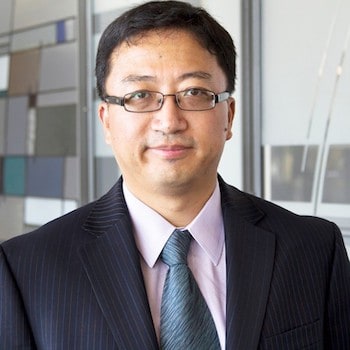
Xianglei Huang is a Professor in the Department of Climate and Space Sciences and Engineering at the University of Michigan. He holds a Ph.D. and M.S. in Planetary Science (minor in Applied Computation) from the California Institute of Technology and a B.S. in Atmospheric Physics and Environmental Sciences from the University of Science and Technology of China. His research bridges satellite remote sensing and climate modeling, with expertise in radiative transfer, cloud-radiation interactions, and spectral data analysis.
Research Interests: Prof. Huang's work focuses on atmospheric radiation applications in climate modeling and remote sensing, diagnostic analysis of satellite data, cloud-radiation-climate feedbacks, and high-latitude surface-atmosphere coupling. His group specializes in leveraging spectral dimensions for climate insights, employing tools like hyperspectral satellite observations and advanced radiative transfer models.
Publication Trends: Recent articles (2022–2025) emphasize polar climate dynamics, far-infrared remote sensing, machine learning applications in atmospheric science, and improving climate model parameterizations. Key themes include ice cloud radiative effects, surface emissivity retrievals, and satellite mission design (e.g., PREFIRE, FORUM).
Awards & Leadership:
- NASA Henry J.E. Reid Award (2015)
- Amazon Climate Research Grant
- Co-Investigator for NASA/ESA missions: Libera, PREFIRE, FORUM
- Editor for Journal of Climate (AMS)
- Chair of AMS Atmospheric Radiation Committee
Lab & Advising: Leads the Huang Research Group at UMich, focusing on radiation-climate interactions. He teaches courses on atmospheric radiation (CLIMATE/SPACE 380, 532) and climate data analysis (CLIMATE/SPACE 586).