معرفی
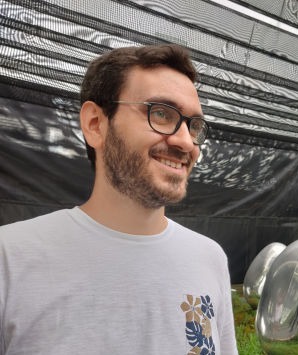
Xavier Pennec is a Senior Research Scientist (Directeur de Recherche) at Inria since 2007, holding the 3IA Côte d'Azur Chair on Geometric statistics and geometric subspace learning. He is affiliated with the Inria centre at Université Côte d'Azur and leads the Epione team in Sophia Antipolis.
His educational background includes a PhD from Ecole Polytechnique (1996), Habilitation from University of Nice-Sophia Antipolis (2006), Master's degree from Ecole Polytechnique and Ecole Normale supérieure (1993), and Engineer Degree from Ecole Polytechnique (1992). He previously served as a Research Scientist at INRIA (1998-2007) and Post-doctoral associate at MIT (1997).
His research focuses on the intersection of statistics, differential geometry, computer science and medicine, particularly in computational anatomy. He has made significant contributions to geometric statistics involving statistical computing on Riemannian manifolds and other geometric structures. His work includes mathematically grounded methods for medical image registration, statistics on shapes, and clinical research applications. He co-edited the first reference book on Riemannian Geometric Statistics in Medical Image Analysis (2020) and was awarded the ERC Advanced Grant G-Statistics in 2018.
His publications demonstrate expertise across geometric statistics, manifold-valued image processing, medical image registration, and computational anatomy, with recent work focusing on implementing theoretical frameworks through the Geomstats software.
- ERC Advanced Grant G-Statistics (2018)
He teaches in the Master MVA (Mathematics, Vision, Learning) program at ENS Saclay (28h module) and the Master of Data Science and Artificial Intelligence at Université Côte d'Azur (30h module), both with H. Delingette. His research has been presented at numerous conferences including MICCAI, IPMI, and workshops on Mathematical Foundations of Computational Anatomy (MFCA) which he animated from 2006 to 2019.
He has contributed to EU projects including Health-e-Child, developing computational anatomy models for brain and heart shape variability using geometric currents and diffeomorphisms. His current research through the ERC G-Statistics project aims to ground the mathematical foundations of geometric statistics and demonstrate their impact on life science applications.