معرفی
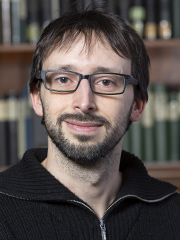
Professor Wim N. Brouw is a faculty member at the Kapteyn Astronomical Institute within the Faculty of Science and Engineering at the University of Groningen. His research primarily focuses on radio astronomy using the LOFAR (Low-Frequency Array) telescope, with expertise in calibration techniques, high-resolution imaging, and observations of various astronomical phenomena across multiple international collaborations.
Prof. Brouw's research interests span several key areas in radio astronomy. He specializes in the development and application of advanced calibration techniques for radio interferometry, particularly for the LOFAR telescope. His work includes high-resolution imaging at low radio frequencies, studies of supernova remnants like Cassiopeia A, Cygnus A, Taurus A, and Virgo A, investigations into the physics of radio emissions from various cosmic sources, and contributions to multi-messenger astronomy through follow-up observations of gravitational wave events. His research has significantly advanced the capabilities of low-frequency radio astronomy.
Analysis of Prof. Brouw's recent publications reveals a strong focus on advancing the LOFAR telescope's capabilities for sub-arcsecond imaging. His work spans from foundational calibration strategies to specific astronomical observations, demonstrating both technical expertise in radio interferometry and deep knowledge of various astronomical phenomena. The research shows a clear progression toward higher resolution and more sensitive observations at low radio frequencies, enabling new discoveries in cosmic structure and evolution.
Prof. Brouw has contributed to significant collaborative projects in radio astronomy, working with international teams on LOFAR observations and data analysis. His work appears in leading astronomy journals including Astronomy & Astrophysics and Nature, reflecting the high impact of his research. He has also contributed to important datasets including the LOFAR Bootes and 3C295 field sources, CasA/CygA/TauA/VirA models at various frequencies, and the LOFAR Long-Baseline Calibrator Survey.
As an active researcher, Prof. Brouw maintains collaborations across the global astronomy community, contributing to both technical advancements in observational methods and substantive discoveries about cosmic phenomena. His work continues to influence the field of radio astronomy through innovative approaches to data collection, processing, and interpretation.