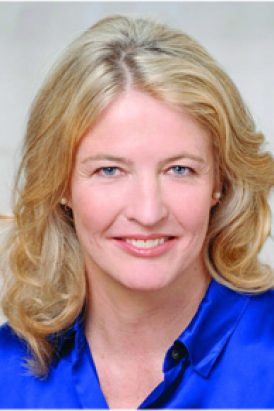
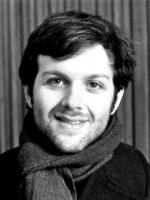
Prof. Dr. Dominik Schwarz is a faculty member at the Faculty of Physics , Bielefeld University. His research focuses on Cosmology and Particle Physics , particularly in the areas of Dark Energy , Dark Matter , Cosmological Inflation , and Large-Scale Structure Formation . He contributes to projects like the International LOFAR Telescope Consortium and the SFB-TRR 211 on strongly interacting matter. APART Fellow of Austrian Academy of Sciences Humboldt Fellow CERN Fellow His recent work explores the cosmic dipole anisotropy , axion density perturbations , and multi-wavelength cosmic web mapping . He also advances data science infrastructure through the PUNCH4NFDI consortium.
Jonathan C. Pober is an Associate Professor of Physics at Brown University, leading research into the Epoch of Reionization (EoR) and Cosmic Dawn through low-frequency radio astronomy. His work focuses on detecting the highly-redshifted 21 cm line emission from neutral hydrogen during the early Universe, addressing challenges in separating this signal from astrophysical and human-generated radio interference. He develops novel analysis techniques and collaborates on cutting-edge experiments like the Murchison Widefield Array (MWA) and the Hydrogen Epoch of Reionization Array (HERA). Education: PhD in Physics, University of California, Berkeley (2013) MA in Physics, University of California, Berkeley (2010) MPhil in Physics, University of Cambridge (2008) BA in Physics, Haverford College (2007) Research Interests: Cosmic Reionization, Radio Astronomy, 21 cm Cosmology, Signal Processing, and Instrumentation Development. His lab explores methods to mitigate radio frequency interference and optimize interferometric calibration for precise EoR measurements. Teaching: Courses include Basic Physics B, Astronomy, Astrophysics and Cosmology, and Advanced Electromagnetic Theory. He emphasizes bridging theoretical concepts with observational techniques in his curriculum. Awards: NASA Roman Technology Fellow Lab & Projects: Directs the Pober Lab at Brown University, advancing experiments like FARSIDE (Farside Array for Radio Science Investigations of the Dark Ages and Exoplanets), a proposed lunar-based array to study the Dark Ages.
Alyson M. Brooks is an Associate Professor in the Department of Physics and Astronomy at Rutgers University, part of the School of Arts and Sciences. Her research focuses on galaxy formation and evolution, particularly using cosmological simulations to study dark matter dynamics, stellar abundances, and galactic structures. She holds a PhD in Astronomy from the University of Washington (2008) and has held prestigious fellowships, including the Sherman Fairchild Fellowship at Caltech and the Grainger Postdoctoral Fellowship at UW-Madison. Brooks has been recognized with awards such as the 2015 Alfred P. Sloan Research Fellowship and the 2019 Maria Goeppert Mayer Award from the American Physical Society. Her educational background includes a B.A. in Physics with Astronomy from Macalester College (2000) and an M.S. in Astronomy from the University of Washington (2004). Her research interests span topics like the interplay between baryonic processes and dark matter, chemical evolution in dwarf galaxies, and the role of feedback mechanisms in galaxy formation. Brooks is actively involved in outreach, including founding the RU-PREP program to support undergraduate research and mentoring initiatives. Brooks has authored over 100 refereed publications, with recent work exploring the resolved stellar populations of dwarf galaxies using the James Webb Space Telescope and analyzing dark matter halo properties through simulations. Her scientific contributions have advanced understanding of galaxy kinematics, dark matter interactions, and the evolution of galactic structures across cosmic time.
Laura Blecha is an Associate Professor in the Physics Department at the University of Florida, specializing in astrophysics. Her research focuses on supermassive black hole (SMBH) and galaxy evolution through numerical simulations and observational collaborations. PhD from Harvard University (2012) Full Member of NANOGrav pulsar timing collaboration Associate Member of the LISA Consortium Her work spans three primary areas: SMBH Formation & Evolution : Origins of SMBHs, galaxy merger-driven growth, and intermediate-mass black hole demographics AGN Fueling & Feedback : Hydrodynamic simulations of AGN activation mechanisms and observational bias in AGN detection Binary SMBH Dynamics : Gravitational wave recoil effects, three-body interactions, and pulsar timing array detection strategies Recent publications (2025) focus on dual AGN detection with Keck AO, JWST studies of primordial galaxies, and NANOGrav gravitational wave background analysis. Her group develops sub-grid models for SMBH dynamics in cosmological simulations and investigates signatures of black hole mergers in galaxy clusters. Laura's research combines computational methods (Illustris, BRAHMA simulations) with observational validation through: JWST NIRSpec spectroscopy Pulsar Timing Array analysis Multiwavelength imaging campaigns
Gordon J. Stacey is the David C. Duncan Professor in the Physical Sciences and CCAT Project Director at Cornell University's Department of Astronomy. He received his PhD in Astronomy from Cornell in 1985 and joined the faculty in 1991 after postdoctoral work at UC Berkeley. His research focuses on star and galaxy formation across cosmic time, utilizing far-infrared/submillimeter spectroscopy. He leads the CCAT Project, developing the FYST telescope in Chile, and is Principal Investigator for the POEMM mission targeting protoplanetary disks. Notable contributions include instrumental advancements like ZEUS-2 and EoR-Spec, as well as seminal studies on [CII], [NII], and [OIII] lines in high-redshift galaxies. Education: PhD in Astronomy from Cornell University (1985). Research emphasizes interstellar medium interactions, cosmic evolution, and instrumentation. Key projects include EoR-Spec for FYST (first light 2027) and the VIPA-based POEMM mission (2029 balloon flight). Awards include the David C. Duncan Professorship. His work bridges observational cosmology, galaxy evolution, and technological innovation in astronomy. Scientific awards include the endowed David C. Duncan Professorship. Current roles involve directing the CCAT Project and advancing instrumentation for submillimeter astronomy. Future projects focus on protoplanetary disk studies via POEMM and FYST observations of the Epoch of Reionization.
Pearl Sandick is a Professor in the Department of Physics and Astronomy and Interim Dean in the College of Science at the University of Utah. She has previously served as Associate Chair of the Department of Physics and Astronomy and Associate Dean for Faculty and Research in the College of Science. Her academic journey at the University of Utah began in 2011 as an Assistant Professor, progressing to Associate Professor in 2017, and achieving the rank of Professor in 2022. Her educational background includes: BA in Mathematics from New York University (2003) PhD in Physics from the University of Minnesota (2008) Sandick is a theoretical particle physicist whose research focuses on physics beyond the Standard Model, with particular emphasis on dark matter. Her work spans theoretical modeling, connections to astrophysical observations, and implications for experimental detection. She investigates various dark matter candidates and their potential signatures in current and future experiments, including collider searches, direct detection experiments, and indirect detection through astrophysical observations. Her research also extends to connections between particle physics and cosmology, including early universe phenomena and implications for cosmic structure formation. She has developed computational tools like MADHAT for dark matter analysis and has made significant contributions to understanding how stellar evolution can constrain axion physics. Her scholarly contributions have been recognized with several prestigious awards: University of Utah Early Career Teaching Award (2016) University of Utah Distinguished Mentor Award Linda K. Amos Award for Distinguished Service to Women University of Utah Presidential Scholar Sandick has been actively involved in mentoring graduate students, as evidenced by her teaching of PhD thesis research and Master's research courses. She has secured significant research funding from the National Science Foundation and other agencies to support her work on dark matter, dark energy, and new physics. Her grant portfolio includes projects on theoretical particle physics, connections to astrophysical observations, and studies on graduate education reform following a departmental tragedy. She is an active member of the American Physical Society, having served as Chair of the regional Four Corners Section in 2021-2022, demonstrating her commitment to the broader physics community and leadership in her field.
Norm Murray is a Professor at the Canadian Institute for Theoretical Astrophysics (CITA) within the University of Toronto . With a Ph.D. from UC Berkeley (1986), his research spans nonlinear dynamics , planetary formation , solar system evolution , and active galactic nuclei . His work combines theoretical physics with observational data from radio telescopes, X-ray satellites, and cosmological simulations. Recent research focuses on galaxy formation (via FIRE simulations), dark matter interactions in dwarf galaxies, and AGN disk dynamics . He employs machine learning for planetary collision modeling and investigates the interplay of magnetohydrodynamics and radiative transfer in quasar environments. Publications highlight his expertise in computational astrophysics, spanning topics from cosmic molecular gas mapping to the stability of exoplanetary systems.
Prof. G. Scott Watson is a Professor in the Department of Physics at Syracuse University, affiliated with the College of Arts & Sciences. His research focuses on the interplay between fundamental particle physics and cosmology, particularly early universe cosmology, inflationary models, dark matter/energy, and string theory applications. He holds a Ph.D. in Physics from Brown University (2005) and B.S. degrees in Mathematics and Physics from the University of North Carolina at Wilmington (2000). Key research interests include string phenomenology as a quantum gravity framework, probing inflationary scenarios through cosmic microwave background (CMB) studies, and exploring dark matter origins. He leads major projects like CMB-S4 and contributes to the CMBPol mission concept. Watson has received the American Physical Society Outstanding Referee Award (2021) and serves on high-profile collaborations such as the Inflation Probe Study Analysis Group (IPSAG). Teaching responsibilities include advanced courses like Quantum Field Theory, Relativity and Cosmology, and Quantum Mechanics II. He actively mentors students through independent studies and advises on graduate admissions. Watson has secured significant grants, including a Department of Energy-funded project on theoretical particle physics and cosmology (2013–2025) and NSF support for cosmic acceleration research (2018–2023).
Priyamvada Natarajan is the Joseph S. and Sophia S. Fruton Professor of Astronomy and Professor of Physics at Yale University, serving as Chair of the Astronomy Department and Chair of the Women Faculty Forum. Her research focuses on cosmology, gravitational lensing, and black hole physics. She explores topics like dark matter distribution, supermassive black hole formation, and the interplay between galaxy evolution and AGN feedback. Natarajan has pioneered methods for mapping dark matter in galaxy clusters using gravitational lensing and has contributed to understanding cosmic structure formation through large-scale simulations. Education: Ph.D. in Astrophysics from Cambridge University (1998). Research interests include the nature of dark energy, galaxy formation, and the history and philosophy of science. She leads projects like DAVOS (Dwarf AGN variability studies) and QUOTAS, a platform for discovering supermassive black holes. Her recent work includes detecting overmassive black holes at high redshifts, analyzing gravitational-wave signals with NANOGrav, and utilizing JWST data to probe the cosmic dawn. Notable honors include the 2022 Liberty Science Center ‘Genius Award’. Natarajan’s collaborations span multi-messenger astronomy, leveraging gravitational lenses as cosmic telescopes. She advocates for gender equity in academia and has advised numerous observational and theoretical studies, though specific student names are not listed. Key projects involve the BUFFALO survey for cluster lens modeling and the ngEHT (next-generation Event Horizon Telescope) to study black hole environments. Her lab integrates cosmological simulations, observational data, and theoretical frameworks to address fundamental questions in astrophysics.
Jacqueline N. Hewitt is the Julius A. Stratton Professor of Physics at the Massachusetts Institute of Technology (MIT), affiliated with the MIT Kavli Institute for Astrophysics and Space Research. She has been a faculty member since 1989 after completing her Ph.D. at MIT and postdoctoral appointments at MIT's Haystack Observatory and Princeton University. From 2002 to 2019, she served as Director of MIT's Kavli Institute. Her research focuses on radio astronomy techniques applied to fundamental astrophysical problems. She pioneered wide-area radio surveys leading to the discovery of the first Einstein ring gravitational lens. Current investigations include low-frequency studies of the Cosmic Dawn and Epoch of Reionization through leadership roles in the Murchison Widefield Array (Australia) and Hydrogen Epoch of Reionization Array (South Africa) projects. Major Awards: American Academy of Arts and Sciences Fellow (2016) Time Magazine's 25 Most Influential People in Space (2012) American Physical Society Fellow (2004) Maria Goeppert Mayer Award (1995) Presidential Young Investigator Award (1991-1996) She leads the Hewitt Research Group exploring radio instrumentation and observational cosmology, with recent work measuring intergalactic medium heating from the first stars using novel radio telescope arrays.
James E. Aguirre is an Associate Professor in the Department of Physics and Astronomy at the University of Pennsylvania. His research focuses on understanding galaxy formation, cosmology, and large-scale structure through advanced instrumentation and observational techniques. He leads projects such as HERA (Hydrogen Epoch of Reionization Array) and TIM (Terahertz Intensity Mapper), dedicated to studying the early universe and distant star-forming galaxies. Aguirre’s work involves cutting-edge millimeter-wave and radio instrumentation design, including Z-Spec, PAPER, and MUSTANG. He has contributed to significant discoveries, such as detecting massive water reservoirs around quasars and determining distances to gravitationally lensed galaxies. Supported by NSF grants, his research bridges observational astronomy with cosmological theory. Education: Ph.D. in Astrophysics (thesis work on TopHat balloon-borne telescope). Teaching: ASTR011 Introduction to Astrophysics I. Current Projects: HERA, TIM, Simons Observatory, and PAPER. Grants: NSF Grant No. 0807990 and others. His research group collaborates on instrumentation like the Bolocam Galactic Plane Survey and explores techniques for mitigating calibration errors and improving signal analysis in radio interferometry. Aguirre’s efforts advance both observational methods and our understanding of cosmic evolution from the epoch of reionization to present-day galaxy formation.
Tobias Marriage is a Professor in the William H. Miller III Department of Physics & Astronomy at Johns Hopkins University, within the Krieger School of Arts & Sciences. He co-leads the Cosmology Large Angular Scale Surveyor (CLASS) project and contributed to the Atacama Cosmology Telescope (ACT) by designing its initial receiver and analysis pipeline. His research focuses on understanding the universe's evolution through measurements of the cosmic microwave background (CMB) and studying dusty star-forming galaxies (DSFGs) and galaxy clusters. Education: PhD in Physics from Princeton University. He actively collaborates on large-scale cosmological surveys and develops cutting-edge instrumentation for millimeter-wave observations, including aerogel filters and polarization-sensitive detectors. His work addresses fundamental questions about cosmic inflation, reionization, and the thermal Sunyaev-Zel’dovich effect in galaxy clusters. Research highlights include leading the CLASS telescope’s design and operations, analyzing ACT data for extragalactic point sources, and exploring quasar feedback mechanisms. His contributions span both observational cosmology and instrument innovation, with a focus on maximizing sensitivity and reducing noise in CMB measurements. Notable projects include the CLASS experiment’s E-mode polarization measurements and efforts to characterize the physical properties of high-redshift DSFGs. He emphasizes the need for future space-based far-infrared telescopes to advance studies of these galaxies. His work also includes calibrating galaxy cluster masses via weak-lensing techniques and improving data analysis pipelines for large-scale surveys.
Martin Rey is a Lecturer in the Department of Physics at the University of Bath, specializing in theoretical astrophysics with a focus on galaxy formation and evolution. His research employs advanced computational methods to investigate fundamental questions about dark matter, star formation, and cosmic structure. His primary research interests include: Modeling the formation and co-evolution of stars, galaxies, and cosmic structures Using supercomputers for detailed fluid dynamics models of galaxies Investigating the nature of dark matter and its distribution Exploring the formation of the first stars and early universe processes Understanding how chemical elements permeate the Universe Dr. Rey's research portfolio reveals a strong concentration in Dark Matter Physics (100%), Dwarf Galaxy Physics (80%), Galactic Evolution Physics (74%), and Stellar Mass Physics (63%). His recent publications demonstrate expertise in radiation-hydrodynamics simulations, particularly through the EDGE project framework, which examines various aspects of dwarf galaxy physics and dark matter distribution. His notable scientific achievements include: Christopher Skinner Prize for outstanding PhD research (2020) Fellow of the Royal Astronomical Society (awarded December 7, 2024) Beecroft Fellowship (awarded September 1, 2021) Dr. Rey is actively engaged in research leadership as Co-Principal Investigator on the MEGATRON project (2023-2028) and Engineering Dwarf Galaxy project (2019-2027), and as Co-Investigator on the Vintergatan project (2020-2025). He serves as a peer reviewer for prestigious journals including Monthly Notices of the Royal Astronomical Society, Astronomy & Astrophysics, and The Open Journal of Astrophysics, and regularly presents at international conferences such as his Maynooth University seminar (November 2024) and First Galaxies conference (April 2025).
Katherine Freese is the Jeff & Gail Endowed Chair of Physics at the University of Texas at Austin and a Guest Professor at Stockholm University. She previously held the George E. Uhlenbeck Professor of Physics position at the University of Michigan until her move to Texas in 2019. Freese is renowned for her work in theoretical cosmology and astroparticle physics, focusing on dark matter, dark energy, and models of the early universe. She received a $13M grant (2014–2024) for cosmoparticle physics research at Stockholm University and served as Director of NORDITA (Nordic Institute for Theoretical Physics) from 2014 to 2016. Education: B.A. in Physics from Princeton University (1977), M.A. from Columbia University (1981), and Ph.D. from the University of Chicago (1984). She held postdoctoral positions at Harvard-Smithsonian Center for Astrophysics, the Institute for Theoretical Physics (Santa Barbara), and a Presidential Fellowship at UC Berkeley. Her career milestones include becoming the first woman on the physics faculty at the University of Michigan and being elected to the National Academy of Sciences (2020). Research Interests: Dark Matter and Dark Energy detection Dark Stars (first stars powered by dark matter annihilation) Primordial Black Hole formation Early universe inflationary models cosmic microwave background (CMB) experiments Paleo-detector methods using ancient minerals Publications Trends: Her recent work emphasizes observational cosmology (e.g., JWST and SPIDER experiments), dark matter detection strategies, and redefining inflationary scenarios. She has explored novel stellar phenomena like dark stars as potential seeds for supermassive black holes, and proposed interdisciplinary approaches like using minerals as paleo-detectors for neutrinos and dark matter. Awards: 2021: University of Chicago Alumni Professional Achievement Award 2019: Lilienfeld Prize for bridging cosmology and particle physics 2012: Honorary Doctorate from Stockholm University Simons Foundation Fellowship (2012) APS Fellow Advising & Grants: Supervised over 20 students and postdocs, many now leading roles in academia and industry. Grants include NSF Presidential Young Investigator Award (1990–1995) and a decade-long Stockholm University grant. Her research teams collaborate on CMB projects (Simons Observatory, LiteBIRD) and dark matter searches (DAMA/LIBRA, IceCube). She co-leads global initiatives like the Cosmic Microwave Background collaboration and paleo-detector networks. Labs & Teams: Active in the Physics Randall Lab (formerly at Michigan), the Weinberg Institute for Theoretical Physics , and the Nordita institute. Collaborates with SPIDER balloon teams and the Simons Observatory for CMB studies. Also involved in James Webb Space Telescope (JWST) analyses and mineral-based detection projects.
Blake Sherwin is a Professor of Cosmology and Astrophysics at the Department of Applied Mathematics and Theoretical Physics (DAMTP), University of Cambridge. He has held roles including Assistant Professor (2017–2022), STFC Ernest Rutherford Fellow (2017–2022), and NASA Einstein Fellow (2016–2017). His research focuses on theoretical and observational cosmology, particularly gravitational lensing of the Cosmic Microwave Background (CMB) and large-scale structure. Education: PhD in Physics from Princeton University (2008–2013); Part III Mathematics and Parts I/II NST Physics at the University of Cambridge (2004–2008). Research Interests: Sherwin's work spans CMB physics, gravitational lensing analysis, and precision cosmological measurements. He leads the CMBLENS project, funded by the European Research Council, focusing on lensing effects in the CMB to probe cosmological parameters and structure formation. Publications: Over 30 peer-reviewed articles, including studies on CMB lensing reconstruction, POLARBEAR and ACTPol collaborations, and cross-correlation analyses with galaxy surveys. Key contributions involve delensing techniques, Sunyaev-Zel'dovich effect measurements, and dust foreground mitigation. Group: Current members include postdocs Boris Bolliet and Fiona McCarthy, and PhD students Frank Qu, Gerrit Farren, Irene Abril Cabezas, and Carmen Embil-Villagra. Former members have transitioned to roles at institutions like Harvard, Princeton, and the University of Geneva.