معرفی
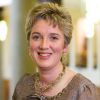
Dr William Barras is a Lecturer in Language and Linguistics within the School of Language, Literature, Music and Visual Culture at the University of Aberdeen. He holds a PhD from the University of Edinburgh and has previously held research and teaching positions at the Universities of Manchester and York. His academic profile reflects a strong commitment to teaching and research in sociolinguistics and dialectology.
His educational background includes an MA (Hons), PGCE, MSc, and PhD in Linguistics and English Language from the University of Edinburgh. His doctoral research focused on the sociophonology of rhoticity and r-sandhi in East Lancashire.
Dr Barras’s research centers on sociolinguistics, dialectology, and phonological theory. He has led and contributed to projects on lexical attrition in Scottish fishing communities and regional identity in sociophonetic variation. His current research explores phonological change across the lifespan in individual speakers. He has published extensively on Northern English dialects, Scottish lexical variation, and rural accent change. His work often bridges empirical fieldwork with theoretical phonology.
The recent articles reflect a consistent trajectory in regional English dialects, phonological change, and sociolinguistic perception. Themes include rhoticity, lexical attrition, social evaluation of speech variants, and the influence of rural and occupational communities on language. His publications appear in peer-reviewed journals and edited volumes, with a focus on both UK regional varieties and broader world Englishes.
Scientific recognition includes:
- Nominated for 'Extra Mile' award, AUSA Student Choice Awards (2014)
- Nominated for College of Arts and Social Sciences Excellence in Teaching Award (2014, 2015)
Dr Barras is actively involved in PhD supervision and undergraduate teaching. He supervises students on topics including North East Scottish speech perception and pronunciation pedagogy in Pakistan. He has taught core linguistics modules such as Phonetics, Sociophonetics, and Research Methods. He also contributes to academic administration as the Examinations Officer for Language and Linguistics and as the Linguistics Pathway Representative in the Scottish Graduate School of Social Science. There is no mention of external grants, but his participation in funded projects like Fisherspeak and the Leverhulme Regional Identity project indicates prior grant involvement.
He is affiliated with research teams focused on Scottish dialects and regional identity, particularly through collaborative projects like Fisherspeak. His work with the Scottish Graduate School of Social Science further connects him to a national network of sociolinguistic researchers.