معرفی
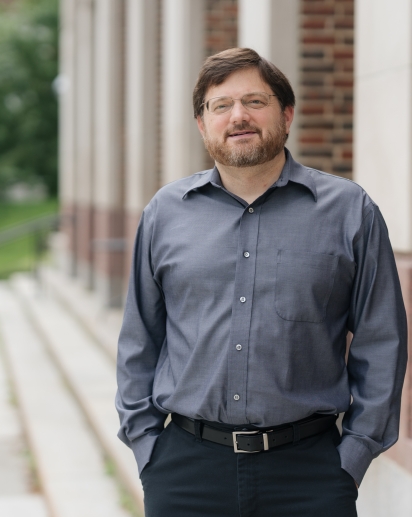
Professor Kevin Watson serves as Executive Dean of the Faculty of Arts and Professor of Linguistics at the University of Canterbury since 2011, with executive leadership commencing in May 2022. His advocacy emphasizes the critical relevance of arts and humanities education in developing essential skills for contemporary societal challenges, as highlighted in his 2024 news feature championing diverse arts education.
- Doctor of Philosophy, University of Lancaster
Watson's research centers on sociolinguistics, investigating language-society interrelationships through corpus-based methodologies and experimental approaches. His primary expertise spans phonetics, phonology, and dialectology, with concentrated focus on British English (particularly Liverpool/Scouse dialects) and New Zealand English variations. He examines how social structures shape language production/perception, sound change mechanisms, and second language acquisition patterns, utilizing large linguistic databases to analyze vowel systems, rhoticity, and phonetic gradience.
His recent publications reveal a methodological evolution toward computational linguistics, increasingly employing machine learning (particularly random forests) to analyze sociophonetic variation. Collaborative work with Jennifer Hay, Lynn Clark, and James Brand demonstrates consistent focus on New Zealand English phonetic systems, while maintaining strong connections to British dialectology. Research trajectories show growing integration of forensic phonetics applications and political discourse analysis, particularly regarding economic language and immigration narratives.
- British Association of Academic Phoneticians (BAAP) Member
- International Association for Forensic Phonetics and Acoustics (IAFPA) Member
- International Phonetic Association (IPA) Member
- International Society for the Linguistics of English (ISLE) Member
- Linguistics Association of Great Britain (LAGB) Member
Watson actively supervises 24+ graduate researchers across diverse sociophonetic investigations, including Antarctic English lexis, Scottish Parliament discourse during independence referendum, Jordanian/Pakistani English variations, and aviation safety linguistics. His Royal Society of New Zealand-funded projects examine speech covariation (2022-2025), language change theory (2018-2022), and Southland accent characteristics (2017-2020), demonstrating sustained research leadership in New Zealand's linguistic landscape.