معرفی
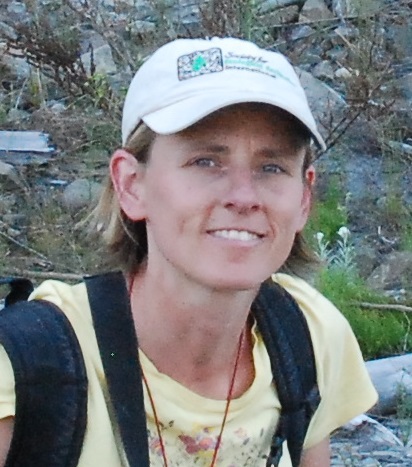
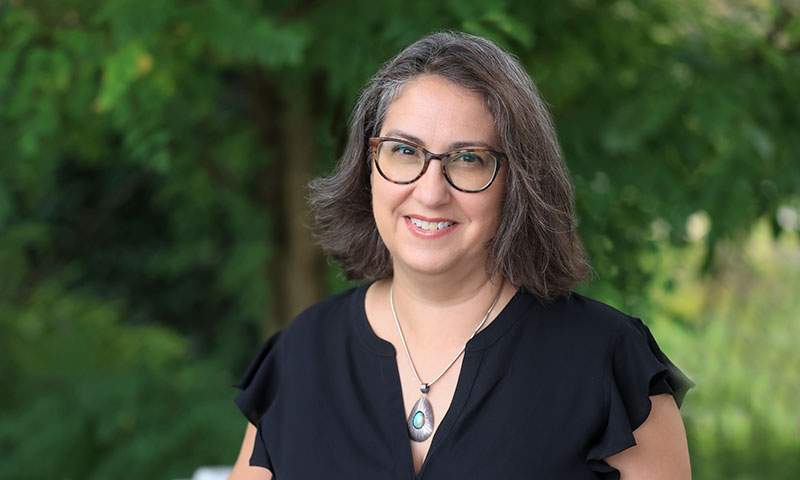
Whitney Mauer is Associate Professor of Environmental Studies and Chair of the Environmental Studies program at Hobart and William Smith Colleges, where she has been a faculty member since 2014. Her academic background includes a Ph.D. and M.S. in Development Sociology from Cornell University, an M.En.S. in Environmental Science from Miami University, and a B.S. in Natural Sciences: Geology from the University of Puget Sound.
- Ph.D., Development Sociology, Cornell University
- M.S., Development Sociology, Cornell University
- M.En.S., Environmental Science, Miami University
- B.S., Natural Sciences: Geology, University of Puget Sound
Her research is deeply rooted in Indigenous studies, political ecology, and critical development studies, focusing on how environmental issues intersect with race, inequality, Indigeneity, and development. She investigates the settler colonial origins of the Elwha River dams and critically evaluates whether ecological restoration can be decolonizing. Her work also challenges resilience frameworks by highlighting the impacts of historical trauma on Indigenous communities.
The analysis of her publications reveals a consistent focus on environmental justice, Indigenous sovereignty, and the socio-political dimensions of ecological restoration. Her scholarship frequently centers on the Lower Elwha Klallam Tribe and critiques mainstream environmental narratives through decolonial and critical theoretical lenses.
- Unsettling Resilience: Colonial Ecological Violence, Indigenous Futurisms, and the Restoration of the Elwha River
- Undamming the Elwha
- Monopoly’s winners and losers: Elwha River Dam construction as social closure
- Restoring the Strong People: The Lower Elwha Klallam Tribe and the Elwha River
- Indian Country Poverty: Place-Based Poverty on American Indian Territories, 2006-10
Whitney Mauer has not listed any scientific awards or fellowships in the provided text. She teaches courses such as FSEM: Consuming the World, ENV 110: Campus Sustainability, ENV 201: Environment and Society, ENV 237: Environmental Justice in Indian Country, and ENV 309: Environmental Change in the Indigenous World. There is no mention of grant funding or student advising in the provided information.
She is actively involved in a collaborative research project with the Lower Elwha Klallam Tribe, contributing to community-based and participatory scholarship. Her work bridges academic research with Indigenous community needs and epistemologies, emphasizing ethical and decolonial research practices.