معرفی
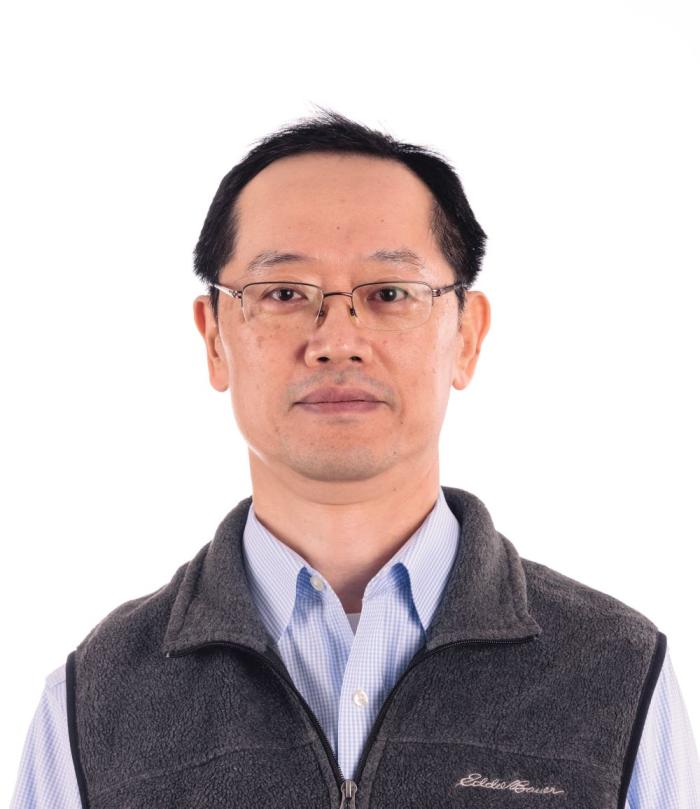
Dr. Weiqun Peng is a Professor of Physics and Graduate Advisor at the George Washington University's School of Engineering and Applied Science. He specializes in theoretical biophysics, computational biology, and systems biology, focusing on gene regulation mechanisms, particularly epigenetic processes that govern cell identity and disease. His work bridges physics-based modeling with biological systems, addressing questions about cellular differentiation and immune function.
Education: Dr. Peng earned his Ph.D. in 2001 from the University of Illinois at Urbana-Champaign, specializing in statistical physics and soft condensed matter systems. He completed postdoctoral training at the University of California San Diego before joining GWU in 2004.
Research Interests: Dr. Peng's research explores how epigenetic marks and regulatory proteins (e.g., 'writers,' 'erasers,' 'readers') shape gene expression in biological systems. His lab investigates the role of chromatin architecture, histone modifications, and transcription factors in processes like T cell differentiation, memory formation, and cancer progression. Key themes include the interplay between transcriptional regulation, genomic topology, and cellular identity.
Scientific Contributions: His work has advanced understanding of epigenetic dysregulation in diseases such as cancer and autoimmune disorders. Notable findings include the role of Tcf1 and CTCF in CD8+ T cell memory, MLL3/MLL4 in embryonic stem cells, and intron retention in craniofacial development. Recent studies focus on chromatin dynamics during immune responses and the molecular basis of T cell exhaustion.
Awards: While no explicit awards are listed, his prolific publication record and focus on high-impact biological systems reflect significant contributions to the field.
Labs/Teams: Dr. Peng's research group integrates computational modeling with experimental approaches to study complex biological systems, emphasizing interdisciplinary collaboration between physics and biology.