معرفی
Waleed Abdalati is a Professor of Geography and Executive Director of the Cooperative Institute for Research in Environmental Sciences (CIRES) at the University of Colorado Boulder. He earned his MS in Aerospace Engineering Sciences (1991) and Ph.D. in Geography (1996) from the University of Colorado. From 1996-2008, he worked at NASA in various positions including research scientist, program manager, and head of NASA Goddard Space Flight Center's Cryospheric Sciences Branch. In 2011-2012, he served as NASA's Chief Scientist, advising the NASA Administrator on science programs and strategic planning.
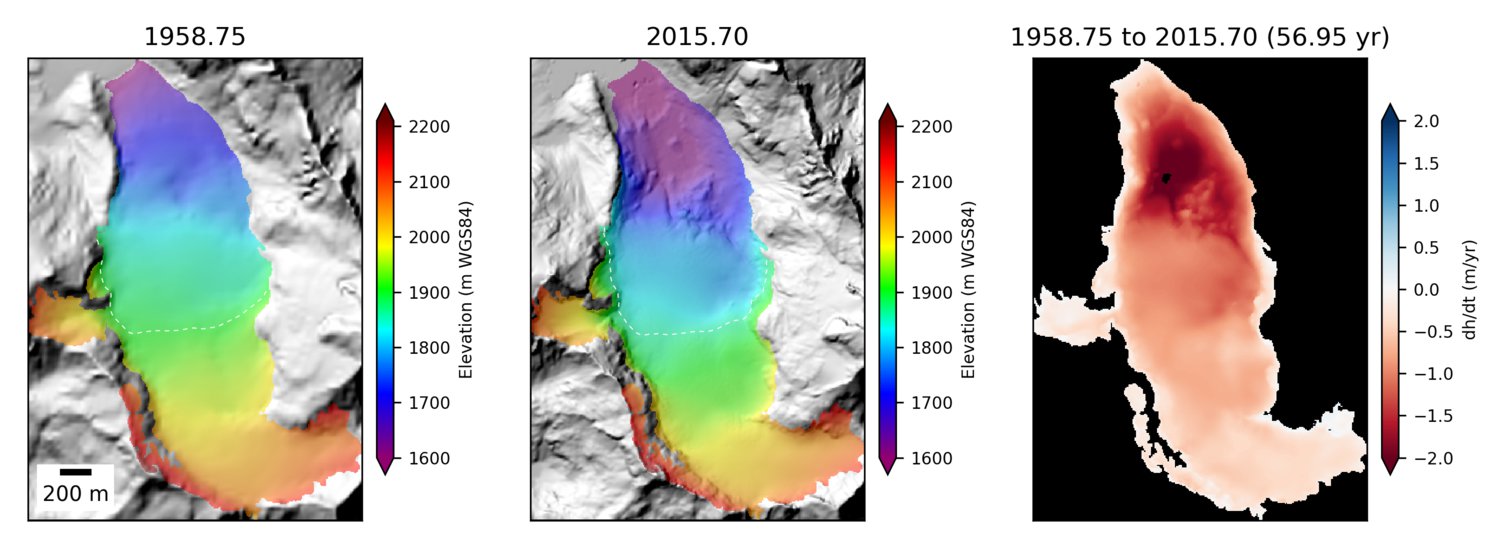
Abdalati's research focuses on remote sensing of Earth's ice cover, particularly using satellite and airborne techniques integrated with in situ observations and modeling to understand how and why Earth's ice cover is changing and what those changes mean for life on Earth. His work centers on contributions of ice sheets and high-latitude glaciers to sea level rise and their relationship to climate change. He has been heavily involved in the development of NASA's Ice Cloud and land Elevation Satellite (ICESat) and its successor, ICESat-2, and has worked on cryospheric applications of various other satellites and aircraft instruments.
His recent research examines meltwater storage in Greenland ice sheet lakes, firn compaction processes, and the spatial distribution of mass loss from the Greenland Ice Sheet using data from GRACE, ICESat, and other missions. His work integrates space-based, airborne, and in situ observations to study changes in Earth's glaciers and ice sheets with implications for understanding sea level rise.
Selected Awards:
- Tau Beta Pi National Engineering Honor Society (since 1985)
- Presidential Early Career Award for Scientists and Engineers (1999)
- NASA Exceptional Service Medal (2004)
- American Institute of Aeronautics and Astronautics Space Systems Award (2006)
- NASA Chief Scientist appointment (2011-2012)
Abdalati teaches courses including Introduction to the Arctic Environment and Advanced Remote Sensing. He has advised graduate students Christopher Picard and Michela Savignano. His research has been supported primarily by NASA, with significant contributions to understanding ice sheet dynamics, climate change impacts, and improving satellite observations of Earth's changing cryosphere.