معرفی
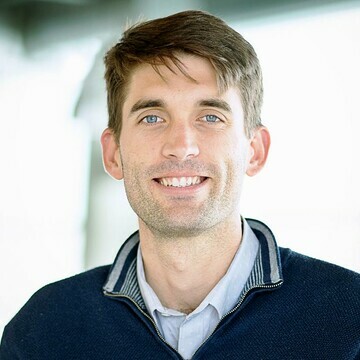
Venanzio Raspa is a Full Professor of Theoretical Philosophy at the Department of Humanistic Studies of the Università degli Studi di Urbino Carlo Bo, where he teaches Theoretical Philosophy and Aesthetics. With an academic career spanning over three decades, Professor Raspa has established himself as a leading scholar in Metaphysics, Ontology, History and Philosophy of Logic, and Aesthetics, with particular expertise in Austrian Philosophy and the School of Brentano.
His research journey has taken him to prestigious institutions across Europe, including Universität Graz, Katholieke Universiteit Leuven, Vrije Universiteit Amsterdam, and Universitat Pompeu Fabra de Barcelona. Professor Raspa's scholarly contributions include numerous books, edited volumes, and research articles focusing on philosophers such as Meinong, Twardowski, Vasil'ev, and Aristotle.
Professor Raspa's work reveals a consistent focus on metaphysical and logical structures, particularly examining how philosophers throughout history have conceptualized categories, identity, and truth. His research on the 19th-century debate surrounding Aristotle's Categories demonstrates his ability to contextualize philosophical concepts within their historical development. His publications on Meinong's Object Theory and Vasil'ev's Imaginary Logic showcase his expertise in less mainstream but highly influential philosophical traditions.
Among his notable achievements are the critical editions of Twardowski's lecture notes and the correspondence between Meinong and Twardowski, which have made important primary sources accessible to contemporary scholars. His book on Vasil'ev's Imaginary Logic has been particularly influential in understanding the historical development of non-classical logics.
Professor Raspa serves on the editorial boards of several prominent philosophy journals including 'Meinong Studies', 'Discipline filosofiche', and 'Isonomia', demonstrating his active engagement with the international philosophical community. His research has been supported by multiple national projects (PRIN), reflecting its significance within the Italian academic landscape.
His academic journey began with a philosophy degree from the University of Urbino in 1991, followed by a PhD from the University of Bari in 1996. After conducting research at various European institutions and holding a post-doctoral position at Urbino, he was appointed as a researcher in Theoretical Philosophy in 2001, eventually rising to the rank of Full Professor.