معرفی
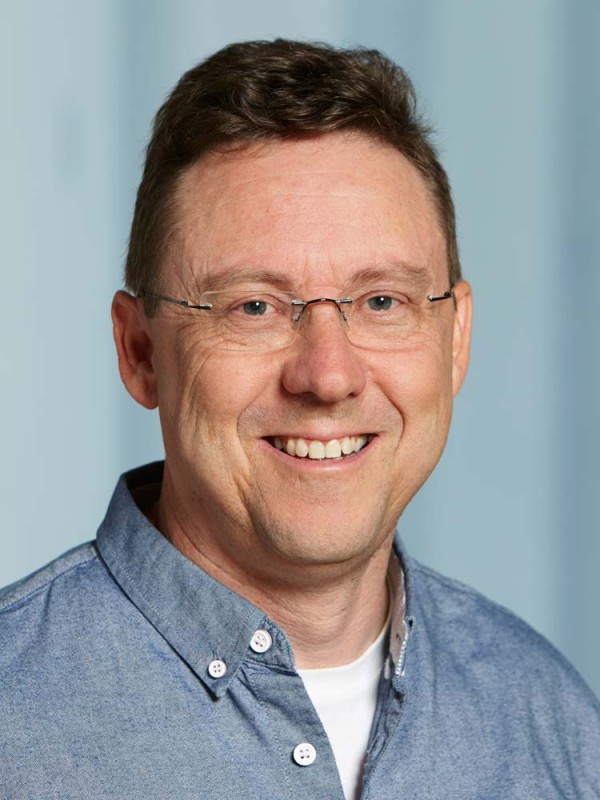
Valerio Lembo is a Researcher at the Institute of Atmospheric Sciences and Climate (ISAC), part of the National Research Council of Italy (CNR) in Bologna. His research focuses on climate dynamics, particularly energy budgets and transports, and the interaction between heat and momentum in the atmosphere.
Dr. Lembo holds a Ph.D. in Ecology and Climate Change from the University of Salento (2013-2016), an M.Sc. in Physics of the Atmosphere and Meteorology from the University of Bologna (2010-2012), and a B.Sc. in Physics and Astrophysics from the University of Rome "La Sapienza" (2006-2009). Prior to his current position, he worked as a Postdoctoral Researcher at the Center for Earth System Research and Sustainability (CEN) at the University of Hamburg (2016-2020), a Research Assistant at CINFAI in Lecce (2016), and was an Academic Guest at ETH Zürich (2015).
His research interests span multiple areas of climate science, with a particular focus on:
- Climate dynamics and atmospheric energy budgets
- Statistical mechanics applications to climate systems
- Dynamical systems theory for understanding climate variability
- Thermodynamics of the general circulation of the atmosphere
- Long-term climate predictability and response to external forcings
Dr. Lembo's publication record demonstrates a consistent focus on understanding atmospheric energy cycles, meridional energy transport, and the application of statistical physics to climate problems. His recent work has examined extreme events from a dynamical systems perspective, long-term changes in the atmospheric energy cycle, and interdisciplinary approaches to climate science. His research often involves developing diagnostic tools for climate models and exploring the fundamental physics underlying climate phenomena.
He has served as a guest editor for special collections in Oxford Open Climate Change and Nonlinear Processes in Geophysics, focusing on extreme events and interdisciplinary climate science perspectives.
Dr. Lembo has been active in science communication, including interviews on climate geoengineering where he has expressed that while geoengineering is "a bad idea from an ethical, political, and economic point of view," research in this area is necessary as a "last resort" option if climate change progresses to critical levels. He contributed to discussions around the 2021 Nobel Prize in Physics, which recognized climate scientists for their work on complex systems.