معرفی
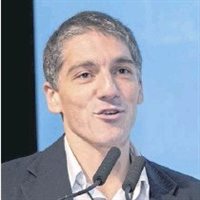
Dr Valeria Insarauto is a Lecturer in Work and Employment at the Sheffield University Management School (University of Sheffield). She holds a PhD from the École des Hautes Études en Sciences Sociales (Paris), with prior academic roles at Aix-Marseille University, Madrid School of Advanced Hispanic Studies, and the University of Lausanne. Her research focuses on gender inequalities in labor markets, particularly atypical employment, work-family dynamics, and workplace discrimination/sexual harassment. She employs quantitative methods and international comparative approaches to analyze how social institutions and gender norms shape employment structures and inequalities across nations.
- Education:
- PhD in Sociology, École des Hautes Études en Sciences Sociales (Paris)
- MSc Social Policy Analysis, Katholieke Universiteit Leuven (Belgium)
- MA Labour Studies, University of Milan (Italy)
- BA in Organization and Human Resources, University of Milan (Italy)
Her research interests emphasize three core themes: gendered socio-economic vulnerability in marginal labor markets, intersectional discrimination and sexual harassment in professions, and the interplay between work and family roles. She collaborates with the Centre for Decent Work and serves on editorial boards of Work, Employment and Society and Papers Revista de Sociologia. Valeria teaches sociology of work, social inequalities, and research methods, prioritizing experiential learning and student engagement.
Her recent publications include analyses of gender discrimination in legal professions (Journal of Professions and Organization, 2022) and part-time work dynamics during economic crises (Work, Employment and Society, 2021). She co-authored a book on women’s labor issues in Italy (2020) and contributes to EU gender equality policy analysis through collaborative research projects.
Valeria actively supervises PhD students exploring gender, intersectionality, and comparative labor market research. She emphasizes fostering critical thinking and inclusivity in both research and teaching environments.