معرفی
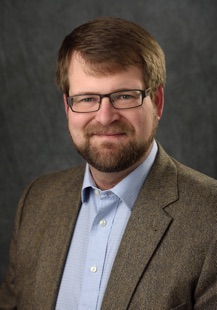
Dr. Tyce DeYoung is a Professor in the Department of Physics & Astronomy at Michigan State University's College of Natural Science. He joined the faculty in August 2014 and works on particle astrophysics at the intersection of high energy physics and relativistic astrophysics. His research involves using extreme cosmic environments to study fundamental physics such as neutrino oscillations and dark matter. He is affiliated with the IceCube Neutrino Observatory and HAWC Gamma Ray Observatory.
- Education: PhD in Physics (2001, University of Wisconsin-Madison); BA in Physics (1996, Grinnell College).
DeYoung’s research focuses on neutrino oscillations, dark matter detection, and astrophysical probes using particles from extreme cosmic environments. His work includes developing software systems and advanced data analysis techniques like machine learning and numerical optimization for event reconstruction in detectors. He is particularly involved in the IceCube Neutrino Observatory, a gigaton-scale neutrino detector at the South Pole, and its next-generation extensions such as PINGU. Additionally, he contributes to the HAWC Gamma Ray Observatory, studying cosmic accelerators including gamma ray bursts and supernovae.
Scientific trends in his publications include high-energy neutrino detection, atmospheric neutrino oscillations, and constraints on gamma ray burst neutrino emissions. His work spans astrophysical systems and software development for particle detection.
He currently serves as deputy spokesperson for the IceCube Collaboration and focuses on extending IceCube capabilities through projects like PINGU. His research also involves interdisciplinary applications of data mining and statistical analysis in fundamental physics.