معرفی
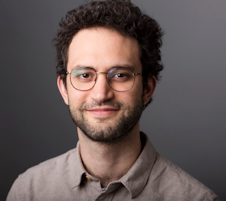
Tomaz Mefano Fares is a Lecturer in the Department of Politics at the University of York, School of Social and Political Sciences. He is actively involved in research on global food regimes, China's agrarian transformation, and South-South economic relations. He is currently supervising PhD students and leads a funded research project on Brazilian soy agribusiness.
Education:
- PhD in Development Studies, SOAS, University of London (2017–2022)
- MSc in Modern and Contemporary History of China, Peking University (2014–2017)
- BA in International Relations, Federal University of Rio de Janeiro (2009–2014)
His research centers on the political economy of agriculture, particularly China’s integration into global food systems. He investigates the role of foreign investment, state-owned enterprises like COFCO, and financialization in shaping rural development trajectories in the Global South. His work critically engages with neomercantilist narratives and contributes to debates on food regime transitions.
The recent publications show a strong thematic focus on China’s soybean imports, Brazil-China agribusiness ties, and the environmental and developmental implications of large-scale agro-industrial expansion. His work spans agrarian change, international political economy, and development studies, often using historical and structural analysis.
Scientific Awards:
- No awards listed in the provided text.
Tomaz Fares is actively involved in research supervision and securing external funding. He is the Principal Investigator of an ESRC-funded project titled The Environmental Governance of Brazilian Soy Agribusiness During Global Power Transition, indicating active grant leadership. While formal students are not listed, he is accepting PhD students, suggesting emerging advisory roles. His collaborative network includes scholars from Latin America and Europe, reflecting transnational research engagement.
He is part of a research team investigating the environmental and governance challenges of soy expansion in Brazil, particularly in the context of shifting global power dynamics. The project involves co-investigators and researchers from multiple disciplines, indicating a multidisciplinary team approach.