معرفی
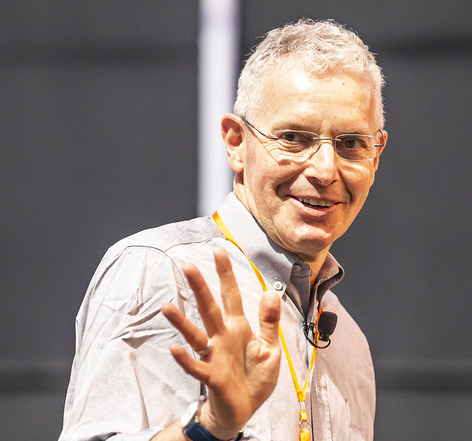
Tomas Kirchhausen is Professor of Cell Biology and of Pediatrics at Harvard Medical School and holds the Springer Family Chair of Pediatrics. He serves as a Senior Investigator at Boston Children's Hospital where he leads the Kirchhausen Laboratory focused on cellular membrane processes and molecular trafficking mechanisms.
Dr. Kirchhausen received his undergraduate degree in Biology from the Universidad Peruana Cayetano Heredia and earned his Ph.D. in Biophysics from the Instituto Venezolano de Investigaciones Cientificas.
His research spans over three decades and focuses on the structure, interactions, and assembly-disassembly mechanisms of clathrin and associated proteins. Using emerging technologies from molecular cloning to high-resolution structural visualization and live-cell imaging, his laboratory has created 'molecular movies' of clathrin-mediated endocytosis. His work integrates x-ray crystallography, cryo electron microscopy, and single-molecule biophysics to understand cellular membrane remodeling processes including intraluminal vesicle formation and nuclear pore assembly. Current research leverages Lattice Light Sheet Microscopy (LLSM) and Adaptive Optics-optimized LLSM to bridge the gap between molecular events and cellular function.
Analysis of his recent publications (2023-2025) reveals a strong focus on integrating advanced imaging techniques with computational approaches, particularly deep learning applications for single-particle tracking and cryo-EM data analysis. His work spans multiple disease contexts including viral infections (particularly SARS-CoV-2), neurodegenerative disorders, and cancer biology, reflecting the broad implications of membrane trafficking research.
- 1st Place Video at the Celldance 2008 contest of the American Society of Cell Biology
- Featured in The New York Times article 'The Animators of Life' (November 15, 2010)
- YouTube 3D movie showing immune cell migration downloaded more than 700,000 times
Dr. Kirchhausen's laboratory serves as a hub for interdisciplinary research, bringing together experts in structural biology, cell biology, and advanced microscopy techniques. His work on clathrin-mediated endocytosis has provided foundational insights into cellular trafficking mechanisms that are relevant to understanding viral infection, cancer, and neurological diseases. The laboratory's development and application of cutting-edge imaging technologies continues to push the boundaries of what can be observed in living cells.