معرفی
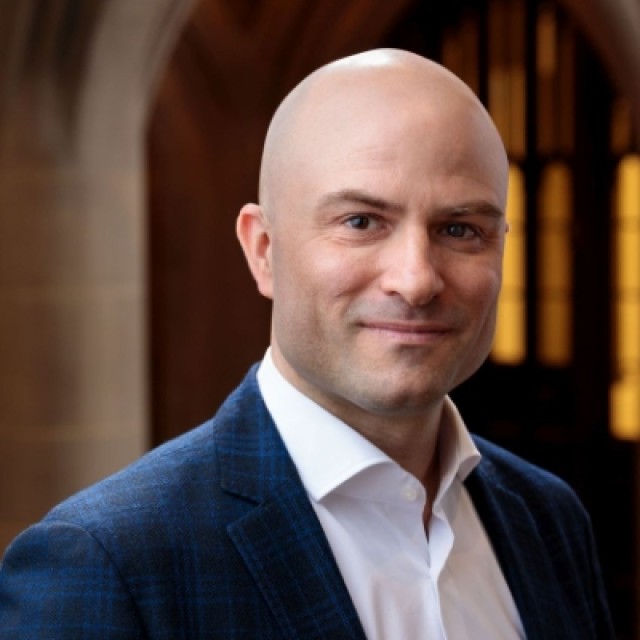
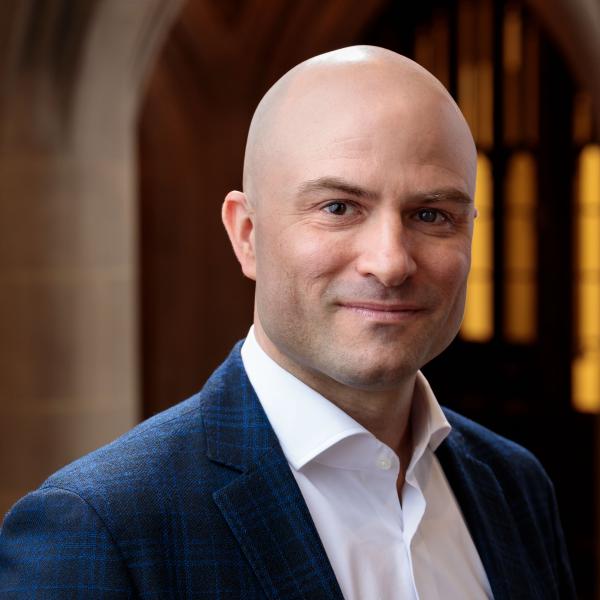
Timothy Harrison serves as Associate Professor in the Department of English at the University of Chicago, holding joint appointments in the John U. Nef Committee on Social Thought and as Associated Faculty in the Philosophy of Religion at the Divinity School since joining the faculty in 2014.
His educational background centers on his 2014 Ph.D. from the University of Toronto, which established his scholarly trajectory in early modern literary studies.
Harrison's research interrogates the literary representation of first-person consciousness in Renaissance contexts, spanning Critical Theory, History of Ideas, and interdisciplinary examinations of literature's relationship with philosophy, theology, and science. His work frequently analyzes John Milton's conceptualization of human freedom, John Donne's embodiment narratives during epidemics, and Thomas Traherne's poetic explorations of natality, emphasizing how literary forms articulate emergent cognitive frameworks.
His publication record reveals consistent engagement with comparative methodologies and global intellectual networks, particularly through recent articles examining cross-cultural connections between Persian and English poetic traditions, the transnational circulation of Galenic medicine, and the philosophical implications of early modern literary representations of life and death.
Harrison's scholarly impact has been formally recognized through:
- John Donne Society Award for Distinguished Publication (2018)
- Milton Society of America’s Albert C. Labriola Award (2013)
As an educator, he designs advanced graduate seminars on philosophical criticism and undergraduate courses spanning Shakespearean drama, Milton's Paradise Lost, and John Donne's works. His teaching integrates primary texts with theoretical frameworks, reflecting his research commitment to interdisciplinary approaches while fostering student engagement with historical and conceptual dimensions of literary analysis.
His collaborative research initiatives—particularly the ongoing comparative project with Jane Mikkelson on Bidel of Delhi and Thomas Traherne—demonstrate active participation in international scholarly networks that bridge literary studies, philosophy, and history of science, though no formal laboratory structures are documented in his academic profile.