معرفی
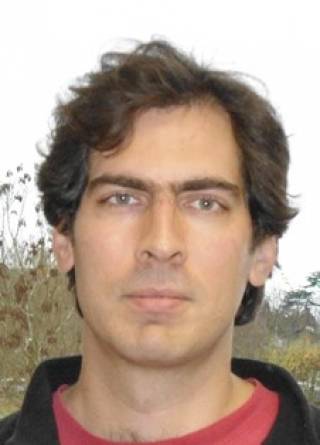
Timothy Andrews serves as an Associate Professor of Atmospheric Science at the University of Leeds and as an Expert Scientist in Climate Science at the Met Office Hadley Centre. He holds a joint position through the Met Office Academic Partnership (MOAP), enabling him to bridge academic research with operational climate science applications across both institutions.
His academic credentials include a PhD in Atmospheric Physics (2010), MRes in Physics of the Earth and Atmosphere (2007), and MPhys in Theoretical Physics (2006), all earned at the University of Leeds. This strong physics foundation underpins his expertise in climate system dynamics.
Dr. Andrews specializes in large-scale multi-decadal climate change processes, with particular focus on heat uptake, radiative forcing, and climate feedbacks at regional to global scales. His research integrates observational analysis, theoretical frameworks, and climate modeling to understand the fundamental mechanisms of climate change. He is especially recognized for his work on Earth's energy balance, climate sensitivity, and pattern effects that influence regional climate responses. His approach emphasizes physical understanding to improve the reliability of climate projections.
His recent publications demonstrate a consistent focus on critical climate science questions, particularly examining Earth's energy imbalance constraints, Southern Ocean sea ice dynamics, and the relationships between sea surface temperature patterns and atmospheric responses. These works contribute significantly to refining climate model performance and understanding the physical constraints on future climate change.
Dr. Andrews is actively engaged in major international climate research initiatives, including leadership roles in CMIP workshops examining radiative forcing in models. His work connects fundamental climate science with practical applications for climate monitoring and prediction through his dual affiliation with the University of Leeds and the Met Office.
He is affiliated with the Institute for Climate and Atmospheric Science at the University of Leeds, contributing to a vibrant research community focused on interdisciplinary approaches to understanding Earth's climate system through observations, modeling, and theoretical analysis.