معرفی
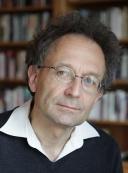
Thomas Schestag is Professor of German Studies at Brown University, where he joined the faculty in January 2014. He has previously taught at universities in Germany (including Bochum, Bonn, Frankfurt, and Munich), Japan, Hungary, and the U.S. institutions including Johns Hopkins, Michigan, Northwestern, NYU, and Virginia.
Professor Schestag's research interests include:
- The relation between literature and philology
- Theories of names and naming
- The intersection of poetry, philosophy, and political theory
- The theory and practice of translation
- The question of a sense for language that precedes conceptual linguistic frameworks
His scholarly work spans European literatures with emphasis on German, French, English, and Greco-Roman antiquity, focusing on literary theory and translation studies. In German literature specifically, his research spans from the Reformation to the present, with particular focus on late 18th- and early 19th-century philosophy, philology, and literature, as well as poetry and politics in 20th-century literature and thought.
Professor Schestag's publications reveal a strong focus on literary theory, German literature, and philosophical approaches to language and naming. His work frequently intersects with political theory and explores boundaries between poetry and philosophy, particularly examining figures like Paul Celan, Walter Benjamin, and Carl Schmitt.
His notable awards and honors include:
- Deutsche Forschungsgemeinschaft (DFG) research grant (1998)
- DAAD travel and teaching grant for University of Tokyo Komaba appointment (2003)
- Distinguished fellowship at FIGS, University Siegen (2008-2009)
- Translator's grant from Deutscher Übersetzerfond (2012)
- Berlin Prize as John P. Birkelund Fellow at American Academy in Berlin (2013)
Professor Schestag has published extensively including numerous books and articles. His teaching is highly interdisciplinary with courses ranging from introductory literature surveys to advanced seminars exploring topics such as 'Prefaces,' 'Stupidity,' 'Friendship,' 'Baptismal Acts,' and 'Extreme Philologies.' His pedagogical approach foregrounds translation as a means of theorizing relations among literature, philosophy, politics, psychoanalysis, and the arts. He has also translated several significant works including four books by Philippe Lacoue-Labarthe and Hugh Raffles' Insectopedia, while his own texts have been translated into multiple languages.