معرفی
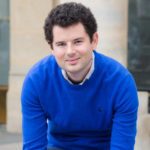
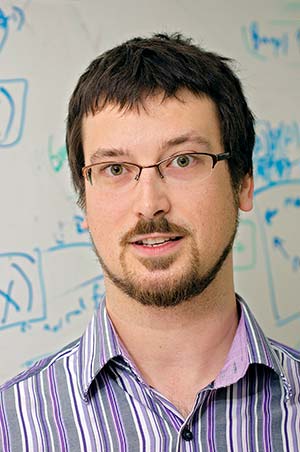
Thomas Obadia is a biostatistician and research engineer at Institut Pasteur in Paris, France, where he has been working since June 2016. He is affiliated with the Bioinformatics and Biostatistics HUB and contributes to the Malaria: parasites and hosts research unit headed by Ivo Mueller. His work bridges statistical methodology development with practical applications in infectious disease epidemiology.
Dr. Obadia holds a Ph.D. in biostatistics from Université Pierre et Marie Curie (Paris 6), with research focused on the spread of nosocomial pathogens using high-resolution contact network data. His doctoral work at INSERM involved developing statistical frameworks to correlate dynamic close-proximity interaction networks with biological carriage data of pathogens like S. aureus. He is the developer of the R0 package for R, which implements methods for estimating reproduction parameters for emerging transmissible diseases.
His research interests span biostatistics, epidemiology, and mathematical modeling of infectious disease transmission. His recent publications demonstrate expertise in diverse areas including long COVID neurobiology, fungal infections, malaria epidemiology, and vector-borne diseases. His methodological contributions focus on contact network analysis, statistical modeling of transmission dynamics, and development of computational tools for epidemic analysis.
As an educator, Dr. Obadia has been consistently involved in teaching bioinformatics and statistics to PhD students through the Bioinformatics program for PhD students at Institut Pasteur since 2018. This program covers statistics, bioinformatics, and image analysis, with a focus on reproducible research, R programming, and experimental design.
His collaborative research spans multiple international projects, particularly in malaria-endemic regions like Cambodia and Brazil. He has contributed to studies on malaria risk exposure using GPS tracking, serological testing strategies for elimination, and mathematical modeling of transmission dynamics. His work demonstrates strong interdisciplinary collaboration across epidemiology, microbiology, and clinical research.