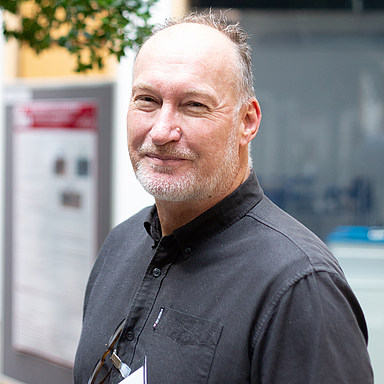
معرفی
Thomas Hankeln serves as Professor of Molecular Genetics in the Faculty of Biology at Johannes Gutenberg University Mainz since 2001, leading research projects 3.1 and 3.2 within the GenEvo initiative. His laboratory operates from the Institute of Molecular Evolution (iomE) at Johann-Joachim-Becher-Weg 30a in Mainz, focusing on evolutionary adaptations to extreme environments.
Hankeln earned his PhD in 1990 and Diploma in Biology in 1985, both from Ruhr-University Bochum. His postdoctoral training occurred at the Institute of Genetics, JGU Mainz (1990-1993), followed by leadership of a Working Group at the Institute of Molecular Genetics (1994-2001).
His research centers on molecular evolution mechanisms, particularly hypoxia adaptation and cancer resistance in subterranean mammals like Spalax mole rats. Key investigations include globin protein functions (myoglobin, androglobin) in non-traditional contexts such as cancer cell protection and ciliogenesis. His group develops genomic tools like All-Food-Seq for metagenomic applications in food safety and evolutionary studies.
Analysis of his 2017-2025 publications reveals three dominant trends: (1) Evolutionary genomics of hypoxia tolerance linked to longevity, (2) Globin-mediated cellular protection against ROS/NO in cancer, and (3) Development of high-throughput genomic methods for radiation biology and food authentication. His work bridges molecular biology, evolutionary theory, and translational medical applications.
Professor Hankeln collaborates extensively across European institutions on radiation response studies and evolutionary genomics. His laboratory maintains active projects on Spalax adaptations and globin protein functions, supported through the GenEvo research training group.