
Thomas Elliott
پژوهشگر ارشد · Quantum Information Processing
Max Planck Institute for the Science of Lightمعرفی
Dr. Thomas Elliott is a Dame Kathleen Ollerenshaw Fellow at the University of Manchester, holding dual appointments in the Department of Physics & Astronomy and the Department of Mathematics. He serves as acting co-Director of the University's Centre for Quantum Science and Engineering and as Theme Lead for Information, Computation, and Physical Foundations. Within the Department of Physics & Astronomy, he is co-lead for Early Career Researchers and is an editor at the open-access Quantum journal.
Dr. Elliott completed his Master of Physics at Oxford University (2009-2013) followed by a Doctor of Philosophy in Topics in Quantum Measurement of Quantum Many-Body Systems (2013-2016). His postdoctoral journey included positions at Nanyang Technological University Singapore, where he secured the prestigious Lee Kuan Yew Research Fellowship in 2018, and at Imperial College London with the Borland Fellowship in Mathematics in 2020, before joining the University of Manchester in October 2022.
Dr. Elliott's research centers on understanding quantum complexity and harnessing it for practical applications. His work explores the fundamental question: What makes a quantum system appear 'complex' and what can we do with this complexity? Under the broad umbrella of quantum simulation, he investigates how quantum technologies can emulate complex classical systems like weather and traffic patterns, while simultaneously studying the structures of quantum dynamics that make them appear complex to classical hardware. His recent research focuses on memoryful open quantum systems, seeking to understand and control environmental interactions that currently limit quantum technology scalability.
Analysis of Dr. Elliott's recent publications reveals a strong focus on quantum advantages for simulating complex systems. His work demonstrates how quantum computers can simulate stochastic processes with significantly reduced memory overhead compared to classical approaches. His research bridges theoretical quantum information with practical applications in modeling adaptive systems (agents), including autonomous vehicles and artificial intelligences. The articles show progression from foundational quantum measurement techniques toward increasingly complex applications involving adaptive agents and non-Markovian processes.
- Lee Kuan Yew Research Fellowship (2018)
- Imperial College Borland Fellowship in Mathematics (2020)
- Dame Kathleen Ollerenshaw Fellowship (2022-present)
Dr. Elliott actively supervises four PhD students and is accepting new PhD candidates interested in quantum information theory and its applications. His supervision focuses on projects exploring quantum memory advantages, quantum-enhanced adaptive agents, and the application of machine learning to quantum simulation. His group is part of the broader Manchester Quantum Systems (ManQS) theoretical physics group.
Dr. Elliott leads research within the Manchester Quantum Systems group, which is part of the University's Centre for Quantum Science and Engineering. His team investigates the complex structures in quantum dynamics and how they can be harnessed for practical applications. The group works at the intersection of quantum information theory, quantum thermodynamics, and complex systems modeling.
Thomas Elliott در سایتهای دیگر
جستوجوهای مرتبط
شاید اینها هم برایتان مناسب باشند
- TThomas ElliottThe University of Manchester · پژوهشگر ارشد
 Huanqing YeThe University of Manchester · پژوهشگر ارشد
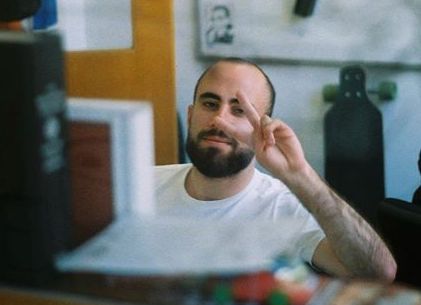 Philip TarantoMax Planck Institute for the Science of Light · مدرس
 Harry LaneThe University of Manchester · پژوهشگر ارشد
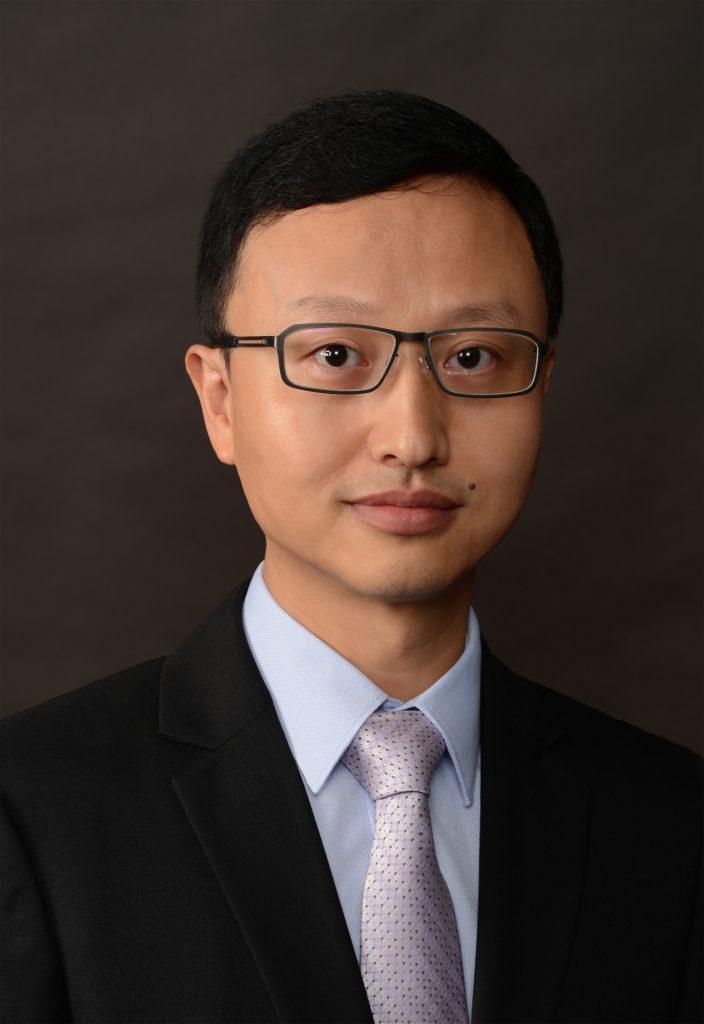 SHEN LeiNational University of Singapore · پژوهشگر
 Raveen TankThe University of Manchester · پژوهشگر ارشد