معرفی
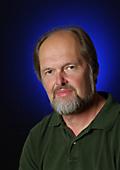
Thomas Cronin is a Professor in the Department of Biological Sciences at the University of Maryland, Baltimore County (UMBC), within the College of Natural and Mathematical Sciences. His research focuses on visual ecology, investigating how diverse animals—from mantis shrimps to whales—have evolved specialized visual systems adapted to their environments.
Education:
- Postdoc, Yale University (1982)
- Ph.D., Duke University (1979)
- M.S., Duke University (1969)
- B.S., Dickinson College (1967)
His research spans physiology, marine science, and neuroscience, with a strong emphasis on sensory adaptations in extreme environments. He teaches courses such as Vision Science, Physiology of Marine and Estuarine Animals, and Neurobiology, mentoring numerous graduate students.
The recent articles highlight a strong trend in crustacean vision, particularly in stomatopods (mantis shrimps), exploring topics like polarization sensitivity, neural processing, navigation, and spectral discrimination. His work increasingly integrates molecular biology, behavioral experiments, and optical physics to understand how complex visual systems evolve and function. Themes include the use of polarized light for communication, retinal metamorphosis during development, and the role of opsins in color vision.
Scientific Awards:
- No awards explicitly listed in the provided text.
Dr. Cronin has successfully secured multiple research grants, including funding from the Air Force Office of Scientific Research for projects such as 'Re-engineering the stomatopod eye' and 'Polarization and multispectral vision in mantis shrimp.' He has advised several students, including Rickesh N. Patel, Mary W. Donohue, and Chan Lin, many of whom have co-authored publications with him. His lab collaborates extensively on interdisciplinary projects involving biomimetic imaging, neural processing, and marine animal behavior.
He is affiliated with a research team that investigates visual systems in marine organisms, often working with colleagues such as Megan Porter, Viktor Gruev, and Roy Caldwell. His lab contributes to understanding how vision drives ecological interactions and inspires bio-inspired technologies.