معرفی
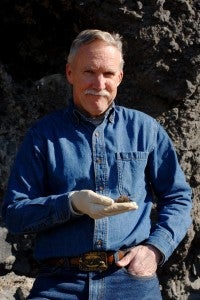
Thomas Connolly is the Director of Research in the Division of Anthropology at the University of Oregon Museum of Natural and Cultural History (UOMNCH), affiliated with the Department of Anthropology within the College of Arts and Sciences. He has held this position since 1986 and is a prominent figure in North American archaeology, with a focus on the Pacific Northwest and the Great Basin.
Education:
- B.S., Minnesota State University, Moorhead (1977)
- M.S., University of Oregon (1982)
- Ph.D., University of Oregon (1986)
Dr. Connolly's research centers on hunter-gatherer-fisher societies, lithic and geoarchaeological studies, cultural resource management, and the analysis of fiber artifacts such as ancient basketry and sandals. His work spans diverse environments including the Pacific coast, the Columbia Plateau, and the Great Basin high desert. He has conducted extensive fieldwork in Oregon, Washington, Minnesota, North Dakota, and Scotland, and has made significant contributions to understanding early human occupation in the Americas through his work at the Paisley Caves and other key sites.
His recent publications highlight trends in precontact plant stewardship, nitrate dynamics on the Oregon coast, and the technological and cultural significance of cordage, netting, and woven sandals in the Great Basin. These works reflect an interdisciplinary approach combining archaeology, environmental science, and museum-based analysis. His research frequently appears in leading journals such as American Antiquity, Quaternary Research, and the Journal of California and Great Basin Anthropology.
Scientific Awards:
Dr. Connolly has led numerous research projects involving museum collections, field surveys, and collaborative studies with tribal communities. He has supervised archaeological assessments for transportation and infrastructure projects across Oregon, contributing to cultural resource planning and preservation. His work integrates geoarchaeology, historical archaeology, and indigenous perspectives to build a comprehensive understanding of human-environment interactions over millennia.
He is actively involved in laboratory and field research, particularly through the University of Oregon’s Museum of Natural and Cultural History, where he oversees a significant collection of archaeological materials. His leadership in long-term projects like those at the Paisley Caves and Fort Rock Cave underscores his role in advancing debates on early human colonization of the Americas.