معرفی
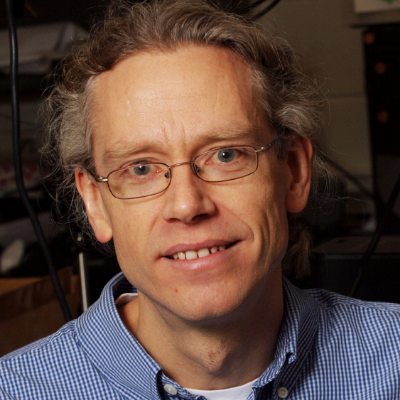
Thomas Carroll is a Professor of Physics in the Department of Physics and Astronomy at Ursinus College. He is actively engaged in research and teaching, leading a lab focused on quantum mechanical interactions in strongly interacting systems using Rydberg atoms. He collaborates with Bryn Mawr College and mentors numerous undergraduate students in both experimental and computational projects.
Education:
- B.S., University of Richmond
- Ph.D., Bryn Mawr College
Carroll's research lies at the intersection of experimental and computational atomic physics, focusing on strongly interacting quantum systems, thermalization and localization, and Rydberg atom dynamics. His work explores how quantum systems exchange energy and simulate condensed matter phenomena using analog quantum computing approaches. The exaggerated properties of Rydberg atoms allow precise control via electric fields, enabling novel studies in quantum control and field ionization. His lab combines magneto-optical trapping at microkelvin temperatures with advanced computational modeling on a dedicated supercomputer.
His recent publications (2004–2024) reveal a consistent focus on dipole-dipole interactions, quantum control, and state-selective detection in Rydberg systems. Trends include the use of genetic algorithms for quantum control, imaging energy transfer, and exploring quantum scars and thermalization. These works span theoretical simulations and experimental validations, often involving undergraduate co-authors.
Carroll has successfully involved students in presenting research at major national conferences such as DAMOP and meetings of the American Physical Society, held in cities including Atlanta, Tucson, Madison, and Anaheim. His students have contributed significantly to publications and presentations, reflecting a strong mentorship culture.
His lab at Ursinus includes a small atomic physics facility and a state-of-the-art supercomputer for modeling quantum systems. The group participates in an NSF-funded collaboration with Bryn Mawr College, where students attend joint meetings and conduct collaborative research during the summer.