معرفی
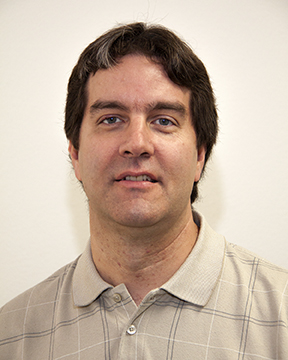
Thomas C. Preston is an Associate Professor jointly appointed in the Department of Atmospheric and Oceanic Sciences and the Department of Chemistry at McGill University's Faculty of Science. His research focuses on developing advanced optical techniques for studying atmospheric aerosol particles at the single-particle level, with applications spanning environmental science, climate research, and fundamental physical chemistry.
Dr. Preston earned his B.Sc. from the University of Toronto (2005), M.Sc. from the University of Western Ontario (2007), and Ph.D. from the University of British Columbia (2011), followed by an NSERC Postdoctoral Fellowship at the University of Bristol (2012-2014).
His research program centers on optical trapping platforms coupled with cavity-enhanced Raman spectroscopy to investigate microphysical and chemical processes in atmospheric aerosols. Key areas include hygroscopicity and water transport, efflorescence and deliquescence, oxidative aging, liquid-liquid phase separation, and surface tension effects. His lab develops cutting-edge instrumentation that enables surface-free control of particles across phase states and timescales inaccessible via bulk measurements.
Analysis of his recent publications reveals a consistent focus on advancing single-particle measurement techniques while applying them to fundamental atmospheric processes. His work bridges optics, physical chemistry, and atmospheric science, with particular emphasis on developing computational methods for interpreting complex optical data from aerosol particles.
Dr. Preston teaches CHEM 219 (Introduction to Atmospheric Chemistry) and CHEM 377 (Instrumental Analysis 2), courses that directly reflect his research expertise in atmospheric processes and advanced analytical techniques.
His laboratory, located in OM 414/OM 430 at McGill University, operates sophisticated optical trapping systems that allow for high-precision study of aerosol particles under controlled environmental conditions. The Preston Group website serves as a hub for sharing research findings, methodology details, and opportunities for collaboration.