معرفی
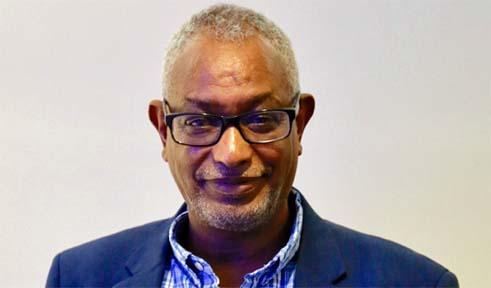
Tefera Negash Gebregziabher is a Lecturer in the Department of History at the Erasmus School of History, Culture and Communication, Erasmus University Rotterdam. His research focuses on African development, political economy, and the historical dynamics of state formation and governance in Ethiopia. He has held affiliations with the International Institute of Social Studies (ISS), Leiden University, University of Cape Town, the Nordic Africa Institute, and the Institute for Social Research in Norway.
Research Interests: His work centers on development studies, African history, and international relations, with thematic expertise in ideological domination, civil-military relations, conflict and peacekeeping, migration, and return migration. He applies classical theories of state, party, and elite studies, combined with long-term historical and political economy perspectives.
Recent Research Trends: His recent publications analyze the evolution of Ethiopia’s political system, particularly under the EPRDF and TPLF, examining concepts such as the developmental state, patrimonialism, oligarchy, and ideological transformation. These works engage deeply with the interplay between power, ideology, and institutional change in the Horn of Africa.
Scientific Engagement: His research contributes to the UN Sustainable Development Goals, especially SDG 16 (Peace, Justice and Strong Institutions). His work has been widely recognized, cited in academic circles, referenced in Wikipedia, and covered by multiple news outlets and social media platforms.
Advising and Grants: While no formal students or grant funding are mentioned in the provided text, his doctoral thesis and collaborative research indicate active scholarly engagement and academic mentorship potential. His affiliations with major research institutes suggest participation in collaborative and funded research projects.
Labs and Research Clusters: He is affiliated with the ERMeCHS research clusters, particularly the GFCP - Global Futures, Colonial Pasts, which explores historical legacies and future trajectories in global contexts.