معرفی
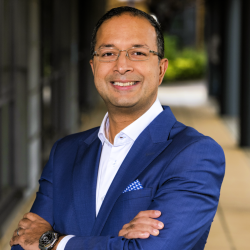
Tazeeb Sultanali Rajwani is a Professor at the Surrey Business School, part of the Faculty of Arts, Business and Social Sciences at the University of Surrey. His research spans international business, corporate political activity, non-market strategies, and sustainability in emerging economies. He frequently collaborates with scholars across Europe and Asia, contributing to high-impact journals in management and business ethics.
His research interests focus on how multinational enterprises navigate institutional complexity, corruption, and socio-political change. Key themes include non-market strategies, environmental sustainability, strategic agility, and entrepreneurial intention. His work integrates theoretical perspectives from institutional theory, dynamic capabilities, and social capital to explain firm behavior in volatile environments.
The recent publications highlight a strong trend toward understanding ethical and strategic responses of firms in politically complex and institutionally fragile contexts. His research increasingly emphasizes values-based nonmarket strategies, collaborative innovation, and the role of gender diversity and governance in driving sustainable outcomes. Much of his empirical work draws on data from China, UAE, Türkiye, and Southeast Asia, offering comparative insights into emerging markets.
Professor Rajwani has contributed to several special issues as a co-editor or lead author, shaping scholarly discourse on non-market strategies, disruptive innovation, and corporate socio-political engagement. His work often serves as an introduction or agenda-setting piece, indicating leadership in these domains.
He has not received any explicitly mentioned scientific awards in the provided text. However, his consistent publication in top-tier journals such as Journal of Management Studies, Journal of International Management, and British Journal of Management reflects significant scholarly impact.
While no direct mention of student advising or grant funding is made in the text, his collaborative publication pattern suggests active mentorship and research leadership. His involvement in multi-author studies across institutions indicates participation in funded research projects, likely supported by national or international grants.
There is no mention of specific labs or research teams in the provided text. However, given his role in special issues and interdisciplinary work, it is likely he collaborates with or leads research networks focused on institutional change, sustainability, and global strategy.