معرفی
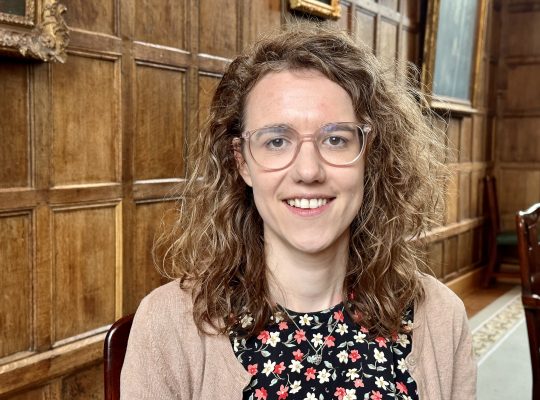
Tara Morton is a Teaching Fellow in Modern British History and an Honorary Research Fellow in the Department of History at the University of Warwick. She is also a Fellow at the Warwick Institute of Engagement and leads the 'Mapping Women's Suffrage, 1911' project, a digital citizen science initiative in collaboration with The National Archives and UK Parliament. Her academic work bridges history, digital humanities, and public engagement.
- BA (Hons) in History
- MA in Modern British History
- PhD in progress at the University of Warwick
Her research focuses on women's suffrage, spatiality, gender, and the visual arts. She explores how suffrage artists used everyday spaces to challenge gendered power structures, with particular interest in the Suffrage Atelier, disability, and imperial contexts. Her work emphasizes inclusive, community-driven histories and digital democratization of historical knowledge.
The recent publications and projects of Tara Morton reflect a strong trend in digital mapping, public history, and feminist spatial analysis. She utilizes web technologies and citizen science to make suffrage histories accessible, emphasizing geographic and social dimensions of the movement. Her interdisciplinary approach combines art, history, and digital tools to reconstruct marginalized narratives.
- Digital Arts & Humanities Lab Award, University of Warwick (2023)
- Bursary Award from Alan Turing Institute, University of Durham, University of Warwick (2023)
- Doctoral Fellowship Award, Humanities Research Centre, University of Warwick
- PGA IAPP Teaching Award with commendation
- Royal Historical Society Bursary (2010)
- Economic & Social History Society Bursary (2010)
Tara Morton has been involved in multiple funded and collaborative research projects, including the 'Women's Suffrage Resources: History & Citizenship Project' funded by HM Government. She mentors students and collaborates with public historians, archivists, and community groups. Her advisory roles in citizen science and public engagement highlight her leadership in translating academic research into accessible formats. She has co-organized international conferences and delivered numerous public talks and workshops.
She leads the 'Mapping Women's Suffrage, 1911' project, which digitally maps suffrage campaigners using census data. The project involves a network of academic, heritage, and community partners, including The National Archives, UK Parliament, The Women’s Library, and The National Trust. It fosters interdisciplinary collaboration across history, digital humanities, and public engagement.