معرفی
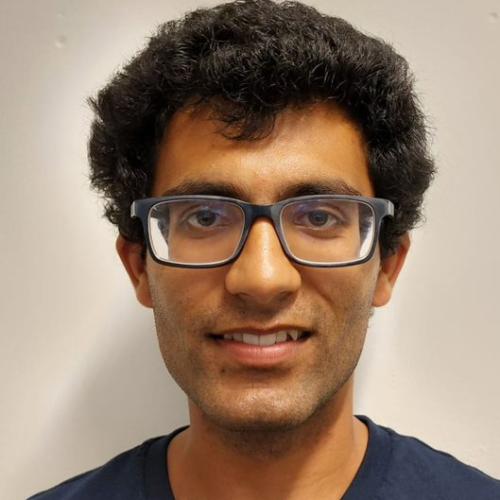
Tanmay Dixit is a Research Fellow at Jesus College, Cambridge, specializing in evolutionary biology with a focus on the coevolution between brood parasites and their hosts. He is affiliated with the Department of Zoology at the University of Cambridge and serves as a Research Associate at the Fitzpatrick Institute, University of Cape Town. His interdisciplinary research integrates evolutionary biology, sensory biology, and applied mathematics to investigate mechanisms influencing coevolutionary dynamics in natural systems.
Dr. Dixit's educational background includes:
- BA, Cantab. (University of Cambridge)
- MA, Cantab. (University of Cambridge)
Dr. Dixit's research centers on understanding how mechanisms constrain evolutionary optimality, particularly in brood parasitism systems. He investigates the coevolutionary arms race between cuckoo finches and their hosts in Zambia, examining egg pattern complexity, mimicry, and host discrimination mechanisms. His work combines theoretical approaches with extensive fieldwork to explore how perceptual constraints shape evolutionary outcomes, with particular interest in whether perception of egg colors and patterns is continuous or categorical.
Analysis of Dr. Dixit's recent publications reveals a strong focus on coevolutionary dynamics in brood parasite-host systems, with particular attention to imperfect mimicry and its maintenance despite strong selection pressures. His work spans evolutionary biology, sensory ecology, and mathematical biology, increasingly incorporating cross-disciplinary approaches that integrate visual ecology, cognitive biology, and physiological ecology to understand coevolution at multiple biological levels.
Dr. Dixit's scientific recognition includes:
- Society for the Study of Evolution Research Excellence Award: Rosemary Grant Advanced Award (2021)
- Associate Fellow of the Higher Education Academy
Dr. Dixit leads field research in Zambia's miombo woodlands as part of the African cuckoos research team. His work combines top-down and bottom-up approaches through collaborations with mathematicians like Prof. L Mahadevan (Harvard) and computer scientists like Dr. Christopher Town (Cambridge). He investigates how perceptual capabilities and phenotypic distributions drive coevolutionary dynamics, with ongoing projects examining optimality in natural systems and how mechanistic constraints prevent optimal solutions from being realized.
Dr. Dixit's primary field research occurs in Zambia through the African cuckoos team, while his laboratory work is centered at Cambridge's Department of Zoology. He collaborates extensively with the Fitzpatrick Institute at the University of Cape Town, integrating expertise in evolutionary biology, sensory ecology, mathematical modeling, and field ornithology to investigate complex coevolutionary questions in natural settings.