معرفی
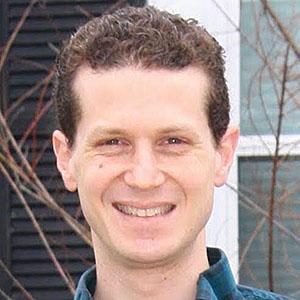
Tanja Müller is a Postdoctoral Researcher (Research Fellow) at the Department of Economics, University of Zurich, where she contributes to the Neuroeconomics and Social Neuroscience Group at the Zurich Center for Neuroeconomics. Her interdisciplinary work bridges neuroscience, psychology, and economics to investigate effort-based decision mechanisms.
Her academic journey includes:
- Bachelor's in Psychology from the University of Freiburg, Germany
- International M.Sc. in Neuro-Cognitive Psychology from Ludwig-Maximilians-University Munich, with a visiting term at the University of Oxford
- DPhil (PhD) in Experimental Psychology from the University of Oxford
Dr. Müller's research centers on Experimental Psychology, Cognitive Neuroscience, and Neuroeconomics, with specialized focus on fatigue dynamics and effort valuation. She employs computational modeling, fMRI, and pharmacological manipulations to dissect how momentary fatigue states influence motivation and choices in both healthy populations and Parkinson's disease patients. Her methodology integrates trial-by-trial self-reports with novel decision paradigms to capture real-time cognitive processes.
Analysis of her publications (2016-2025) reveals a cohesive trajectory toward computational neuroeconomics. She pioneered frameworks linking physical/cognitive fatigue to decision biases, with increasing sophistication in modeling moment-to-moment effort dynamics. Her work consistently bridges clinical applications (e.g., Parkinson's disease) and fundamental mechanisms, emphasizing computational psychiatry approaches to motivational states.
Scientific recognition:
- No specific awards documented in current sources
Regarding academic mentoring and funding, available information indicates no formal advisees. Her research is likely supported through the Zurich Center for Neuroeconomics infrastructure, though specific grants remain unlisted in public profiles. Current activities suggest active collaboration within interdisciplinary neuroscience teams.
She operates within the Neuroeconomics and Social Neuroscience Group, which fosters cross-departmental work between economics, neuroscience, and psychology researchers. This environment enables integration of economic modeling with neural data acquisition and clinical insights, particularly regarding effort-cost computations in decision circuits.