معرفی
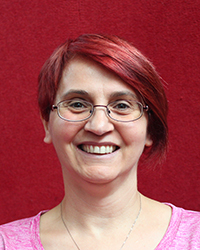
Dr. Tania Maffucci is a Reader in Cell Signalling at the Blizard Institute, Faculty of Medicine and Dentistry, Queen Mary University of London. She is affiliated with the Centre for Cell Biology and Cutaneous Research, where she investigates signalling pathway deregulation in cancer development.
Her educational background includes:
- Chemistry degree (summa cum laude) from the University of Naples
- Two-year postgraduate course in Biotechnologies at Consorzio Mario Negri Sud, Abruzzo
- Dottorato di Ricerca in Oncology from the University of Chieti, Italy
Dr. Maffucci's research centers on phosphoinositide 3-kinase (PI3K) signalling networks, with emphasis on identifying novel regulators of physiological processes and therapeutic targets in cancer. Her work specifically examines class II PI3K roles in cell mitosis, migration, and invasion across cutaneous squamous cell carcinoma and prostate cancer models. She investigates how pathway deregulation drives disease progression and chemotherapy resistance.
Her publication record reveals a focused trajectory in molecular oncology, with recurring themes in PI3K isoform functionality across multiple cancer types. Recent work demonstrates therapeutic potential through targeted kinase inhibition, particularly in prostate and pancreatic cancers, while establishing mechanistic links between PI3K-C2β and cell division dynamics.
Scientific recognition includes:
- Diabetes UK RD Lawrence Fellowship
Dr. Maffucci maintains active teaching commitments across undergraduate and postgraduate programs:
- MBBS Years 1-2: Problem Based Learning facilitation, lecturing, and project supervision
- School of Biological and Chemical Sciences: Course lecturing (BMD116), laboratory coordination, and project supervision for BSc/MSc programs
- PhD supervision focusing on PI3K roles in cancer cell division/migration and therapeutic target identification
She operates within the Centre for Cell Biology and Cutaneous Research at the Blizard Institute, collaborating on interdisciplinary projects that bridge basic cell signalling research with clinical cancer applications.
-Pharmacology.jpg)