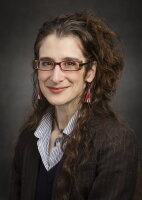
Tamara Eileen Chaplin
استاد · histories of gender and sexuality
University of Illinois Urbana-Champaignمعرفی
Tamara Eileen Chaplin serves as Professor of Modern European History and Lynn M. Martin Professorial Scholar at the University of Illinois at Urbana-Champaign. Her interdisciplinary affiliations span the Departments of History, Gender and Women’s Studies, French and Italian, Global Studies, the European Union Center, the Unit for Criticism and Interpretive Theory, and the initiative on Holocaust, Genocide, and Memory Studies.
Her educational background includes a Ph.D. in Modern European History from Rutgers University (2002) and a B.A. from Concordia University, Montreal (1995). Prior to academia, she worked as a professional ballet dancer, trained actor, and Screen Actor’s Guild member.
Chaplin’s research centers on gender and sexuality histories, media history, and queer theory, with significant contributions to understanding France’s cultural transformations. Her work examines how marginalized groups leverage media to reshape societal attitudes, particularly regarding sexual identity and gender expression across the 20th century.
Her publications reveal consistent engagement with French intellectual history, LGBTQ+ activism, and the intersection of entertainment with social change. Key themes include the role of television in shaping national identity, queer resistance strategies, and the evolution of human rights discourse.
- Provost's Campus Award for Excellence in Undergraduate Teaching
- LAS Dean's Award for Excellence in Undergraduate Teaching
Chaplin actively contributes to academic governance as a governing member of the Western Society for French History and serves on the Comité Scientifique for the Société Pour l’Histoire des Médias in Paris. Her research has received significant funding from the National Endowment for the Humanities, Camargo Foundation, and UIUC’s Center for Advanced Study.
She teaches graduate and undergraduate courses on modern Europe, France, sexuality, human rights, World War I, and media studies, integrating her expertise in performance history and social theory.