معرفی
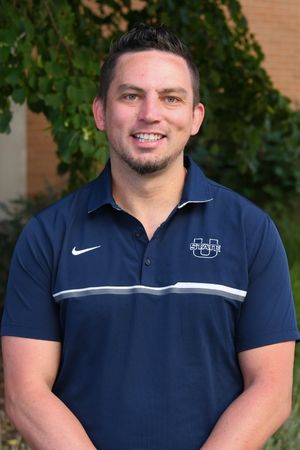
Talin Louder serves as an Assistant Professor in the Department of Kinesiology and Health Science at Utah State University, where he directs the Dennis G. Dolny Movement Research Clinic within the Sorenson Center for Clinical Excellence. His academic journey spans biomechanics research, teaching, and clinical application with focus on human movement analysis.
His educational credentials include:
- PhD in Disability Disciplines, Utah State University (2017)
- MS in Health and Human Movement, Utah State University (2013)
- BS in Exercise Science, Utah Valley University (2010)
- AS from Southern Utah University
Dr. Louder's research centers on wearable technologies for movement analysis, sensorimotor and neuromuscular determinants of agile movement, and therapeutic applications of aquatic environments. His work integrates biomechanical principles with rehabilitation science to optimize movement training and recovery protocols, frequently comparing land-based and aquatic interventions for diverse populations.
Analysis of his 15 most recent publications reveals consistent emphasis on biomechanical measurement techniques (particularly vertical stiffness and reactive strength indices), muscle activation patterns during water immersion, and innovative training methodologies like eccentric overload and stroboscopic vision. The research demonstrates strong interdisciplinary connections between sports science, geriatrics, and clinical rehabilitation.
His scientific recognition includes:
- Graduate Faculty Mentor of the Year Award (2022) from the Department of Kinesiology and Health Science
Dr. Louder has successfully mentored nine Master's students to completion while teaching core courses including Anatomical Kinesiology (KIN 3250) and Topics in Biomechanics (KIN 6610). His teaching philosophy emphasizes practical application of movement science principles to real-world rehabilitation scenarios.
He leads the Dennis G. Dolny Movement Research Clinic, which provides specialized facilities for biomechanical analysis in both aquatic and land-based environments, supporting his research on movement rehabilitation across age groups and ability levels.