معرفی
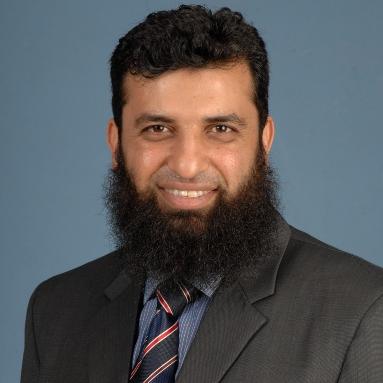
Taimoor Afzal is an Assistant Teaching Professor in the Department of Biomedical Engineering at Worcester Polytechnic Institute (WPI). He joined WPI in January 2022 after completing postdoctoral research at Northwestern University and the University of Texas Health Science Center. His research focuses on human movement control, machine learning, and neural engineering, with a particular emphasis on exoskeleton-assisted gait rehabilitation for neurological disorders such as multiple sclerosis and stroke. Afzal's work explores how exoskeletons modify muscle synergies and neural strategies during walking, aiming to improve mobility and quality of life for affected patients.
Educational Background
- Postdoc, Northwestern University & Shirley Ryan AbilityLab (2018–2021)
- Postdoc, University of Texas Health Science Center & TIRR Memorial Hermann Hospital (2015–2018)
- PhD, Engineering Science and Systems, University of Arkansas at Little Rock (2011–2015)
- MSE, Control Systems, University of Sheffield, UK (2006–2007)
- BS, Computer Engineering, COMSATS Institute of Information Technology, Pakistan (1999–2003)
Research Interests
Afzal’s research integrates biomechanics, robotics, and neuroscience to address mobility impairments. His studies investigate neural adaptations during exoskeleton use, spasticity mechanisms post-stroke, and the design of intuitive assistive devices. Key themes include:
- Development of algorithms for gait mode identification using muscle synergies
- Quantification of reflex excitability in spastic muscles
- Optimization of exoskeleton-assisted gait protocols for neurological patients
Publications Overview
His research spans topics like muscle synergy analysis in MS patients, bilateral effects of stroke on motoneurons, and cognitive demands of exoskeleton use. Notable findings include insights into how exoskeleton assistance modifies neural control strategies without altering core muscle synergy modules.
Teaching Philosophy
Afzal prioritizes fostering a growth mindset and inclusive classroom culture. He emphasizes connecting concepts to real-world applications and developing students’ technical and ethical problem-solving skills in biomedical engineering.