معرفی
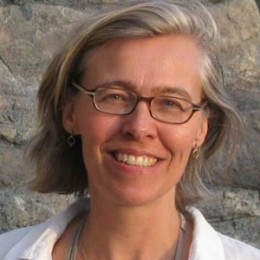
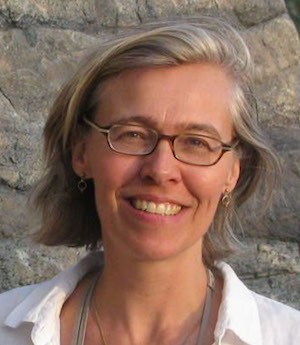
Suzanne M. Carbotte is the Bruce Heezen Lamont Research Professor of Marine and Polar Geophysics at the Lamont-Doherty Earth Observatory (LDEO) of Columbia University. Her work focuses on marine geophysics, particularly using seismic methods to study mid-ocean ridges, subduction zones, and ocean floor mapping. She has made significant contributions to our understanding of crustal evolution, tectonic processes, and the structure of the ocean floor.
Dr. Carbotte received her academic training at prestigious institutions:
- 1982: H.B.Sc. in Geology and Physics, University of Toronto, Ontario
- 1986: M.Sc. in Geophysics, Queen's University, Kingston, Ontario
- 1992: Ph.D. in Marine Geophysics, University of California, Santa Barbara, CA
Her research spans multiple areas of marine geophysics, with particular emphasis on the structure and evolution of mid-ocean ridges and subduction zones. She has pioneered the use of multi-channel seismic techniques to image the internal structure of the oceanic crust, revealing details about magma chambers, crustal formation processes, and the relationship between tectonic and magmatic processes at spreading centers. Her work on the East Pacific Rise has provided fundamental insights into how oceanic crust forms at fast-spreading ridges. Additionally, her research on the Cascadia subduction zone has advanced our understanding of how sediments and plate structure influence earthquake behavior. She has also contributed significantly to Hudson Estuary studies, examining sediment distribution and environmental changes. Her expertise in geoinformatics has led to important contributions to data synthesis and management for marine geoscience research.
Analysis of Dr. Carbotte's recent publications reveals consistent focus on marine geophysical imaging techniques applied to key tectonic settings. Her work primarily centers on two major regions: the East Pacific Rise (a fast-spreading mid-ocean ridge) and the Cascadia subduction zone (where the Juan de Fuca plate subducts beneath North America). Her research employs advanced seismic methods to investigate magma systems beneath mid-ocean ridges, sediment properties along subduction margins, and the relationship between crustal structure and tectonic processes. A notable trend in her recent work is the integration of multiple geophysical datasets to build comprehensive 3D models of crustal structure, particularly focusing on how variations in magma supply, plate motion, and sediment properties influence the formation and evolution of oceanic crust.
Dr. Carbotte's scientific achievements have been recognized with numerous prestigious awards:
- 2015: Elected as an AGU Fellow
- 2010: Ridge2000 Distinguished Lecturer
- 2008: Birch Lectureship and UCSB Distinguished Alumni Award
- 2007: Bruce C. Heezen Research Chair at LDEO, Columbia University
- 1993: LDEO Postdoctoral Fellow, Columbia University
- 1982: Governor General's Silver Medal, Trinity College, University of Toronto
Throughout her career, Dr. Carbotte has been actively involved in major research initiatives and collaborative projects. She has served as principal investigator and co-investigator on numerous grants supporting marine geophysical expeditions and data analysis. Her leadership extends to data management initiatives, including contributions to the Global Multi-Resolution Topography Synthesis and the development of GeoMapApp. She has mentored numerous students and early-career scientists through her research projects and has been instrumental in training the next generation of marine geophysicists. Her work with the Ridge2000 program has fostered interdisciplinary collaboration across the geosciences.
Dr. Carbotte is deeply involved with the Lamont-Doherty Earth Observatory's marine geophysics research group, where she leads projects focused on seismic imaging of oceanic crust. She has been instrumental in developing and utilizing the observatory's advanced seismic data processing capabilities. Her work often involves collaboration with the National Deep Submergence Facility and other major research institutions. She plays a key role in data synthesis initiatives like the Rolling Deck to Repository program, which ensures long-term preservation and accessibility of oceanographic research data. Her research frequently utilizes data from major research vessels and ocean bottom seismometer deployments, contributing to our understanding of fundamental Earth processes.