معرفی
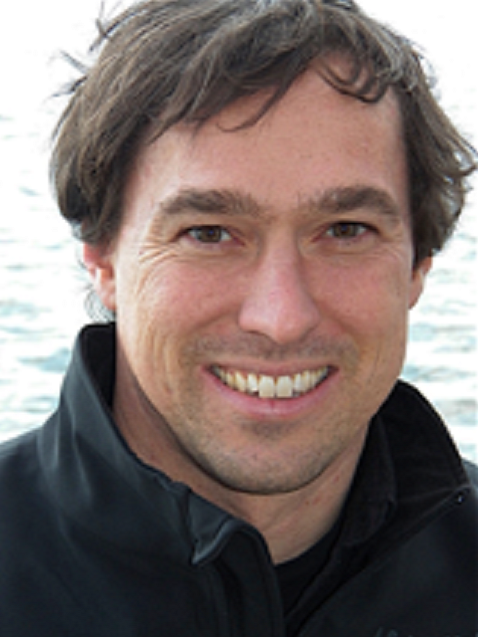
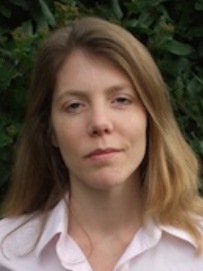
Professor Suzanne Gray is a Professor of Meteorology at the University of Reading and serves as Associate Pro-Vice-Chancellor for research (Environment). She leads the Mesoscale Group which focuses on phenomena spanning horizontal length scales from approximately 1-1000 km, including gravity waves, convective storms, and cyclones.
Her research interests center on mesoscale weather processes, with specific focus on extratropical, Arctic and Mediterranean cyclones, predictability of weather forecasts including ensemble forecasting, climatology of weather phenomena, and midlatitude convection. Her work examines diabatic influences on hazardous Mediterranean cyclones, convective cloud-dynamics-turbulence interactions, sting jet dynamics, and the representation of polar lows in numerical weather forecasts. She investigates how atmospheric processes affect weather prediction accuracy and extreme weather events.
Analysis of her recent publications reveals a strong focus on understanding and predicting extreme weather events, particularly windstorms and Mediterranean cyclones (Medicanes). Her research shows increasing attention to climate change impacts on cyclone behavior, the role of diabatic processes in cyclone development, and the application of AI techniques in weather forecasting. She frequently collaborates with international researchers and institutions, particularly through NERC-funded projects.
Professor Gray actively supervises numerous PhD students and postdoctoral researchers, with current projects focusing on Mediterranean cyclones, Arctic cyclones, trapped lee waves, and convective-scale ensemble forecasts. She leads several major research initiatives including the Diabatic influences on current and future hazardous Med. cyclones project (2024-2028) and the CLOUDY TIME project (2023-2026) as part of the ParaChute programme.
The Mesoscale Group she leads meets weekly for research discussions and includes academic staff, postdoctoral researchers, PhD students, and Met Office researchers who collaborate closely through the MetOffice@Reading partnership.