معرفی
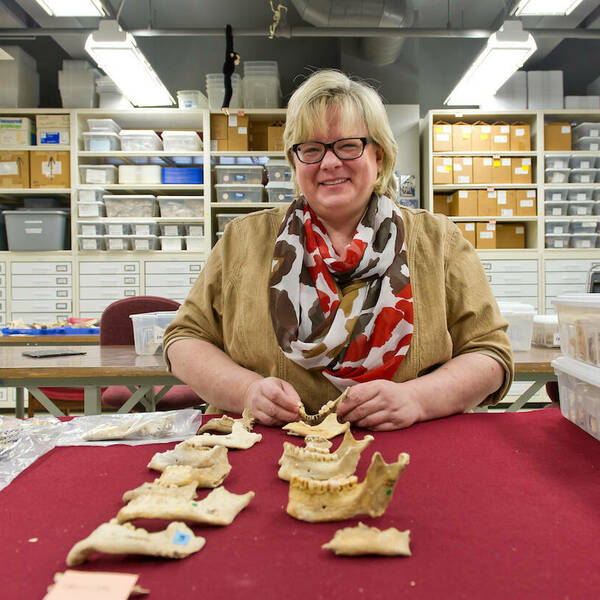
Susan Sheridan is an Associate Professor of Biological Anthropology at the University of Notre Dame. Her research focuses on ancient diet, disease, and occupational stress, with particular attention to childhood health and female reproductive status. She is a lead researcher on the Dead Sea Plain Project, investigating life and death in early walled cities in Jordan, and has analyzed over 15,000 skeletal remains using biocultural anthropology. Her work integrates natural and archaeological evidence to understand past societies. She has conducted fieldwork in Jordan, Israel, Sudan, and the American Southwest, including studies at Qumran, Tel Dothan, and the St. Stephen’s Monastery in Jerusalem. Sheridan’s research on Byzantine monks and Nubian populations highlights the interplay between cultural practices and biological adaptations. She has pioneered methods for analyzing commingled skeletal remains and has collaborated with students on projects like the St. Stephen’s skeletal collection.
- Education: B.A., University of Maryland (1984); M.A., University of Maryland (1986); Ph.D., University of Colorado (1992)
- Key Projects: Dead Sea Plain Project (Jordan), St. Stephen’s Monastery skeletal analysis, Nubian population studies
- Methodologies: Isotope analysis, trace element studies, skeletal trauma analysis
Her research emphasizes interdisciplinary approaches, such as combining stable isotope data with archaeological records to explore topics like diet, migration, and social stratification. Recent studies focus on repetitive motion disorders in monastic populations and the biocultural implications of early urbanization. Sheridan has addressed underrepresentation in bioanthropology and advocates for inclusive research practices.
Her work on Byzantine monks reveals insights into monastic lifestyles through skeletal markers of kneeling, kneeling-related pathologies, and dietary practices. She has also examined interpersonal violence in Early Bronze Age communities and the health impacts of urbanization. Her findings have advanced understanding of how cultural practices shape biological outcomes.