معرفی
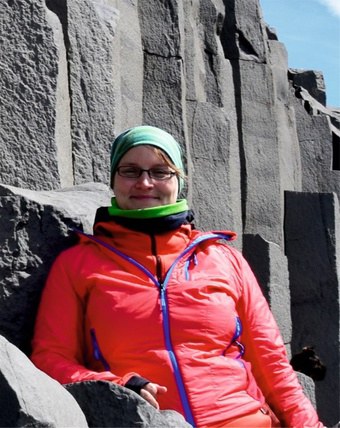
Dr. Susan S. Hubbard is the Deputy for Science and Technology at Oak Ridge National Laboratory (ORNL) and an Adjunct Professor in the Department of Environmental Science, Policy and Management at the University of California, Berkeley. She guides one of the nation's largest R&D portfolios spanning computing, materials science, environmental research, energy technologies, and national security. With over 25 years at national laboratories, she previously served as Associate Lab Director of Earth & Environmental Sciences at Lawrence Berkeley National Laboratory (2015-2022).
Education:
- Ph.D. in Civil and Environmental Engineering, University of California, Berkeley
- M.S. in Geophysics, Virginia Tech
- B.S. in Geology, University of California, Santa Barbara
Her research pioneered hydrogeophysics, focusing on geophysical methods to quantify hydrological, geochemical, and biological interactions in terrestrial systems. Key research areas include:
- Watershed System Science: Interdisciplinary approaches to natural resource challenges
- Hydrogeophysics & Biogeophysics: Field and numerical studies quantifying subsurface processes
- Permafrost Geophysics: Arctic ecosystem characterization and carbon cycle monitoring
- Precision Agriculture: Integrated remote sensing for sustainable viticulture and crop management
Publication trends show evolution from technical geophysical methods (e.g., aquifer characterization) to broader climate solutions (e.g., decarbonization), consistently applying interdisciplinary approaches to environmental challenges.
Awards & Honors:
- National Academy of Engineering Member (2020)
- American Academy of Arts & Sciences Fellow (2019)
- American Geophysical Union Fellow (2017)
- Robert G. Wetzel Award for Water Quality (2019)
- Multiple Society of Exploration Geophysicists awards
She founded and leads the Berkeley Lab Environmental Geophysics Group, developing novel sensors, inversion algorithms, and machine learning approaches. As ORNL's chief research liaison, she coordinates with the University of Tennessee and national laboratories on large-scale initiatives.