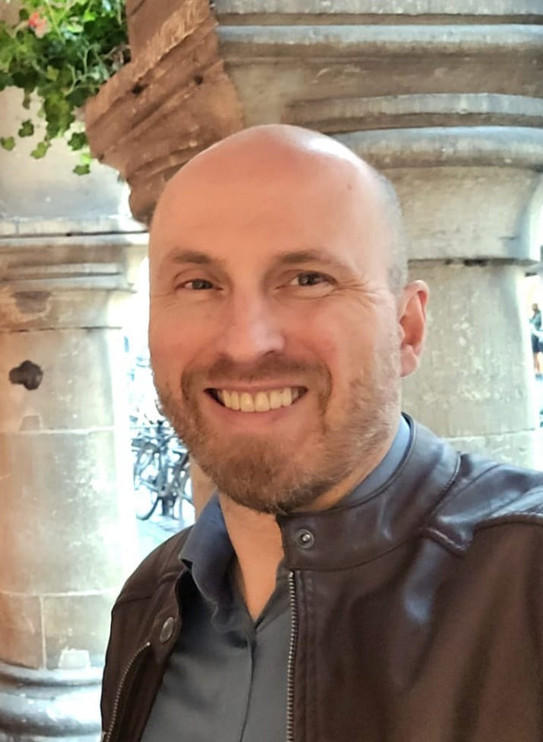
معرفی
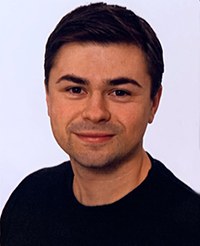
Stewart E. Campbell is a researcher at the Institute of English and American Studies within the Faculty of Cultural Studies at Technical University of Dortmund. His work focuses on applying Universal Design for Learning (UDL) in English language education, teacher professionalization, and diversity/inclusion in language learning contexts.
Education:
- Master of Education in History and English from Bielefeld University, Germany
- Bachelor of Arts in English with minor in Educational Science from Bielefeld University, Germany
- Bachelor of Arts in History with minor in Politics from Whitman College, USA
- Associate of Arts and Science in History, Politics, and Education from North Idaho College, USA
- In-service teacher training at Zentrum für schulpraktische Lehrerausbildung (ZfsL) Minden, Germany
Dr. Campbell's research centers on creating inclusive language learning environments through Universal Design for Learning principles. He investigates how to optimize lesson design and planning for diverse student populations in English as a Foreign Language (EFL) contexts, with particular attention to digitalization and its role in supporting diverse learners. His work bridges theoretical frameworks with practical classroom applications, focusing on teacher professionalization and the development of diversity-sensitive teaching competencies.
His recent publications demonstrate a strong focus on the intersection of diversity, digital tools, and language education. Campbell's research shows a progression from foundational work on Universal Design for Learning to more specific applications in reading promotion and media education. A notable trend is his increasing collaboration with other researchers on projects like DigiNICs, which aims to strengthen digital sovereignty in language education through networked improvement communities.
Professional Affiliations:
- Netzwerk Inklusiver Englischunterricht
- Deutsche Gesellschaft für Fremdsprachenforschung (DGFF)
- Verband Bildung und Erziehung
Dr. Campbell actively contributes to teacher professional development through workshops and presentations at institutions across Germany and Switzerland. His work with the DigiNICs project represents a significant current endeavor to create networked improvement communities that support both digital literacy and inclusive practices in language education.
حوزههای پژوهشی