معرفی
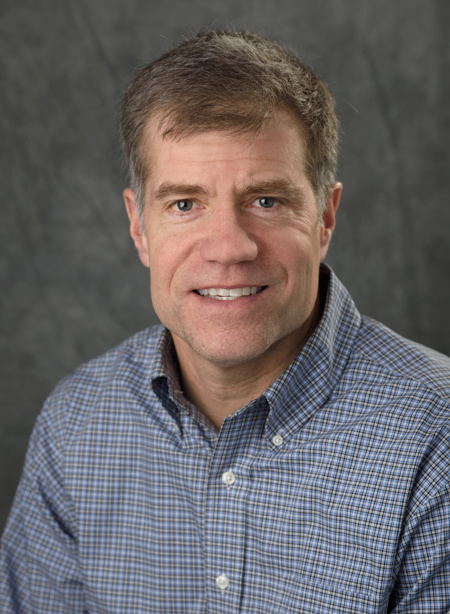
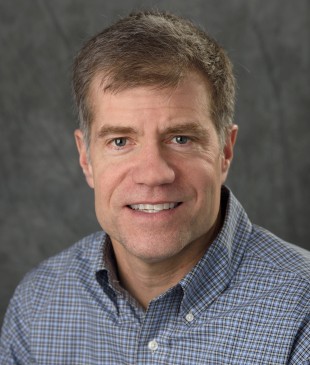
Stephen E. Zepf is a Professor and Chairperson in the Department of Physics and Astronomy at Michigan State University (MSU), part of the College of Natural Science. He serves on the Board of Directors of the SOAR Telescope, having completed a second term as its President. His academic leadership includes chairing the department since 2018 and previously holding roles such as Associate Chair for Astronomy and co-director of MSU's Center for the Study of Cosmic Evolution for five years. He was also a member of the National Academy Panel on the Galactic Neighborhood during the 2010 Decadal Survey for US Astronomy and Astrophysics.
Zepf earned his PhD from Johns Hopkins University. His career path includes a postdoctoral fellowship at Durham University, a Hubble Fellowship at UC Berkeley, and four years as an Assistant Professor and Director of Graduate Studies at Yale University before joining MSU in 2018.
His research prioritizes black holes, neutron stars, and multiple populations in globular clusters. He employs the SOAR, Hubble, and Chandra X-ray Telescopes to study these phenomena, contributing to models of galaxy formation and evolution. This work merges observational astronomy with theoretical frameworks, emphasizing collaboration across institutions.
Scientific Awards and Recognition
- 2024 American Astronomical Society Fellow
- University Distinguished Faculty Award (2013)
- MSU College of Natural Science Faculty Mentoring Award (2014)
- Osgood Teaching Award (2016)
Advising and Academic Service
- Current advisee: Kristen Dage (Graduate Student)
- Notable alumni: Katherine Rhode (Indiana University Assoc. Prof.), Chris Waters (U. of Hawaii astronomer), Matt Steele (science education researcher)
- Outreach leadership: Faculty liason for Abrams Planetarium, led director search and projector funding efforts
- Collaborative roles: Long-term partnerships with Tom Maccarone (since Yale days) and Keith Ashman
Research Infrastructure Zepf leads a research group at MSU, supported by collaborations with institutions like the Insituto Astrofisica Andalucia, Harvard University, and the Universidad de Chile. His team's work integrates cutting-edge telescope data to explore cosmic structures and dynamics.