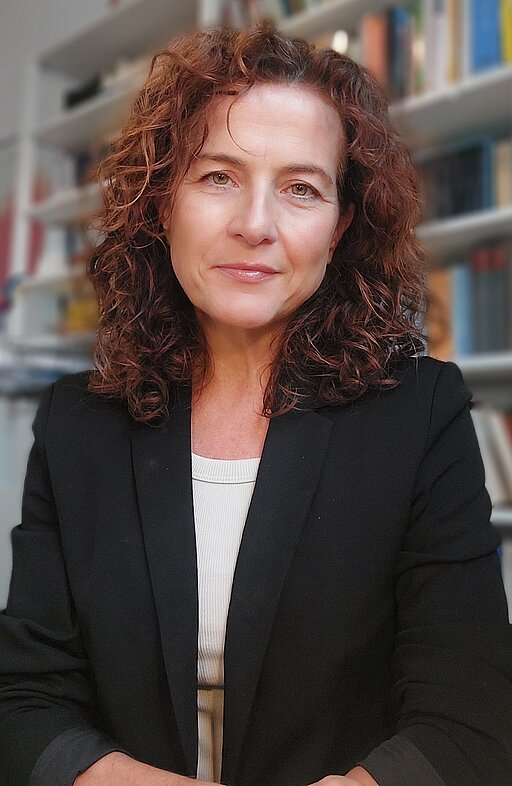
Stephanie Catani
استاد · Contemporary German Literature
Julius-Maximilians-Universität Würzburgمعرفی
Professor Stephanie Catani serves as Chair of Modern German Literary History at the University of Würzburg's Institute of German Philology within the Faculty of Philosophy. She has held this position since September 2021, following her leadership of the Chair of Modern German Literary Studies and Media Studies at Saarland University from 2017-2021. Her academic trajectory spans contemporary German literature, media studies, and the rapidly evolving intersection of literature with artificial intelligence.
Professor Catani's research centers on contemporary literature in digital contexts, with particular expertise in AI-generated literature, gender studies, and intermedial approaches. Her work explores how computational technologies transform literary production, reception, and theoretical frameworks. She has pioneered research on generative literature, examining implications for authorship, creativity, and literary theory. Her interdisciplinary approach bridges traditional literary scholarship with digital humanities, with recent work focusing on literature and podcasting, AI-generated texts, and multisensory experiences in contemporary literature.
Her publication record reveals a clear evolution from traditional literary studies toward digital humanities. Early work focused on historical representation in contemporary literature and intermedial approaches, while recent publications demonstrate increasing engagement with computational methods and their theoretical implications. Her edited volumes on generative literature, AI in the arts, and social media literature showcase her leadership in understanding how digital technologies reshape literary creation and reception.
- Habilitationspreis der Universität Bamberg (2014)
Professor Catani leads the DFG-funded project 'Das Fotogedicht in illustrierten Zeitschriften zwischen 1895 und 1945' (2024-2027) and co-founded the 'Kolleg Moderne und Gegenwart' in 2024. She serves on the directorate of SCIAS (Siebold-Collegium for Institute for Advanced Studies) and participates in the DFG network 'Das Wissen der digitalen Literatur.' Her research initiatives consistently bridge traditional literary scholarship with emerging digital methodologies, particularly in exploring AI's impact on literary creation.
She directs the 'Forschungsstelle Fotolyrik' (Research Center for Photo Poetry) and fosters interdisciplinary collaborations between literary studies, media studies, and digital humanities at the University of Würzburg. Her research teams regularly include scholars from computer science, media studies, and linguistics, reflecting her commitment to interdisciplinary approaches to understanding literature in the digital age.