معرفی
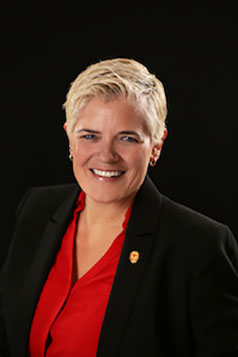
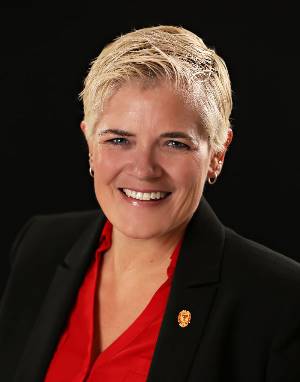
Stephanie A. Lockwood is an Associate Professor in the Department of Biological Sciences at Texas Tech University, where she serves as Associate Chair for Online Programming. She is based at the Waco Extension Site and leads innovative online biology education initiatives. Her academic roles emphasize experiential undergraduate research and international field programs.
- Ph.D. in Biology, Texas Tech University (2011)
- M.S. in Biology, Eastern New Mexico University (2006)
- B.S. in Geology, Eastern New Mexico University (2003)
- A.A.S. in Avionics Systems Technology, Community College of the Air Force (1998)
Dr. Lockwood's research interests center on coral reef ecology, tropical marine biology, and invertebrate zoology, with a strong focus on marine biodiversity and environmental DNA (eDNA). She co-founded the Texas Integrated Diving and Ecological Studies (TIDES) Laboratory, enabling students to conduct field research in Honduras. Her work bridges marine science and pedagogy, emphasizing student-driven projects in coral reef ecosystems and coastal pollution studies.
The recent publications reflect a dual focus: marine ecological research—particularly on fish diversity via eDNA, coral and sponge dynamics, and microplastic pollution—and innovations in STEM education, including graduate teaching assistant development and experiential learning models. These works span molecular ecology, environmental monitoring, and pedagogical research.
Scientific awards include:
- President’s Engaged Scholarship Award for Excellence in Community Engaged Research (2022)
- Texas Tech Teaching Academy Member (2019)
Dr. Lockwood mentors undergraduate researchers extensively, guiding them in publishing and presenting at national conferences. She has no current graduate students but plays a significant role in student professional development. She has been involved in numerous research grants supporting undergraduate fieldwork, experiential learning, and marine conservation projects, particularly through the TIDES Laboratory. Her educational initiatives aim to improve STEM retention and teaching quality.
She leads the TIDES Laboratory, a collaborative, international research program focused on marine ecological studies in Roatán, Honduras. The lab supports student-led research on coral health, reef fish assemblages, and microplastic pollution, integrating fieldwork with academic coursework and conference presentation opportunities.