معرفی
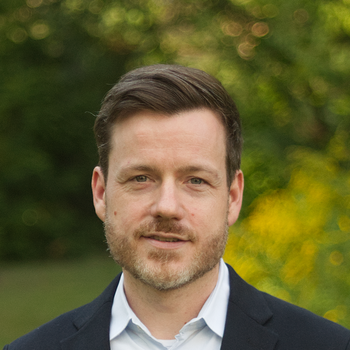
Stephan Rauschenbach serves as Associate Professor of Physical Chemistry at the University of Oxford, where he holds a tutorial fellowship at Wadham College and directs the Ion Beam Deposition Laboratory. His research bridges surface science, mass spectrometry, and high-resolution microscopy to enable atomic-level analysis of complex biomolecules.
Rauschenbach's educational trajectory includes a Dr.sc. in Physics from École Polytechnique Fédérale de Lausanne, with prior affiliations at TU Munich, University of Augsburg, Siemens AG/Infineon, and Sony Fusion Domain Lab in Tokyo. His doctoral work was supported by the Hans-L.-Merkle foundation for Excellence in Science fellowship.
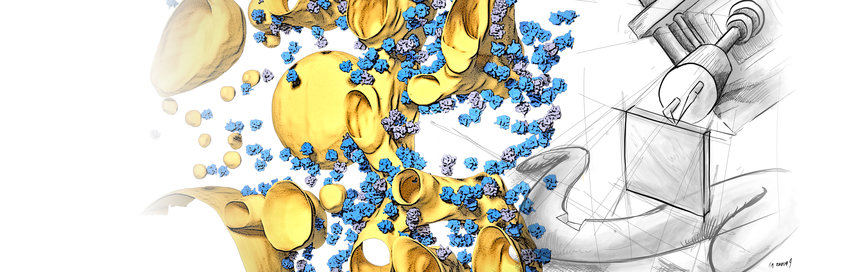
His research pioneers Electrospray Ion Beam Deposition (ES-IBD) for molecular imaging, focusing on three core domains: biomolecular structure (peptides/glycans via SPM/STM), functional coatings (solar sensitizers/molecular magnets), and hyperthermal surface collisions for non-equilibrium chemistry. He develops specialized instrumentation including cryo-EM integration systems and low-energy electron holography tools, with recent work emphasizing graphene substrates and native conformation preservation.
Analysis of his 2022-2025 publications reveals a decisive shift toward cryo-EM and electron holography applications, where ES-IBD enables ice-free sample preparation and direct comparison of gas-phase versus native protein structures. This work establishes new paradigms for studying large biomolecular complexes while maintaining structural integrity.
Key recognitions include:
- Mattauch-Herzog Award from the German Society of Mass Spectrometry (2017)
- Hans-L.-Merkle foundation for Excellence in Science fellowship
Rauschenbach leads an interdisciplinary team developing proprietary instrumentation through industry partnerships. His grants focus on advancing ES-IBD for single-molecule imaging and quantum nanoscience applications, with significant funding directed toward cryo-EM integration and holography reconstruction algorithms. He actively mentors graduate students in physical chemistry methodology development.
The Ion Beam Deposition Laboratory operates as a hub for cutting-edge instrumentation development, with current projects including graphene-based substrate engineering, laser flash melting techniques for sample preparation, and computational tools for electron hologram reconstruction. The lab maintains close collaborations with commercial partners to translate fundamental research into practical imaging solutions for structural biology.