معرفی
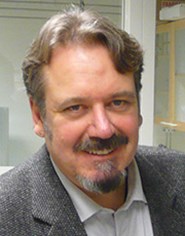
Stephan P. A. Sauer is a Professor and Head of Studies at the Department of Chemistry, University of Copenhagen, where he has served since 2018. Previously, he was Head of the Physical Chemistry Section (2016-2023) and held progressively senior positions from Assistant Professor to Professor (MSO) since 1997. His academic leadership extends to chairing the Study Board for Physics, Chemistry and Nanoscience (2013-2016, 2020-2022) and serving on the Ministry of Children and Education's Working Group.
Dr. Sauer's research focuses on quantum chemical methods development for both traditional high-performance computing and emerging quantum computing platforms. His work spans computational spectroscopy, particularly NMR parameter calculation, molecular electromagnetism, and radiation damage modeling. The Sauer Group, which he leads, develops specialized methods for calculating UV/Vis, CD, IR, MW, Raman, ESR, NMR and Mössbauer spectra, with applications ranging from biomolecular structure determination to quantum information processing.
His publication record shows a clear trajectory toward quantum computing applications in chemistry, with recent work focusing on quantum algorithms for NMR parameters, noise mitigation in quantum simulations, and hybrid quantum-classical approaches. The research demonstrates strong international collaboration, particularly with institutions in Argentina, Brazil, and Japan.
- Teacher of the Year at Department of Chemistry Award (2021/2022, 2018)
- Teacher of the Year at Faculty of Science Award (2014)
- Nominated for Faculty of Science Teaching Award (2015)
- Multiple research scholarships including Danish Research Academy and German National Scholarship Foundation
As Head of Studies and through extensive supervision of PhD examinations, Dr. Sauer plays a significant role in academic training. His research group receives funding from sources including the Novo Nordisk Foundation (HQC² project). The Sauer Group maintains strong connections with experimental groups, providing computational support for structural determination, spectroscopic interpretation, and materials design.