معرفی
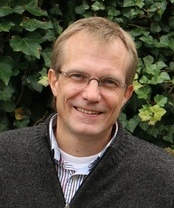
Stefan Roth is an academic faculty member at RWTH Aachen University, serving as an Apl. Prof. (Außerplanmäßiger Professor) in the Department of Physics within the Faculty of Mathematics, Computer Science and Natural Sciences. He is based at the Chair of Experimental Physics III B, located in the Physikzentrum, and is actively involved in research and academic advising.
- Institution: RWTH Aachen University
- Department: Department of Physics
- Chair: Chair of Experimental Physics III B
- Contact: stefan.roth@rwth-aachen.de, studienberater@physik.rwth-aachen.de
His primary role includes being a study advisor (Studienberater) for both Bachelor’s and Master’s students in Physics, where he delivers orientation lectures and organizes academic guidance sessions throughout the academic year.
Stefan Roth’s research interests are rooted in experimental physics, particularly in the domain of particle physics. His affiliation with the T2K (Tokai to Kamioka) experiment and TPC (Time Projection Chamber) technologies indicates a strong focus on neutrino oscillations, detector development, and high-energy physics experiments. His work contributes to international collaborations aiming to understand fundamental properties of neutrinos and subatomic particles.
The available information does not include any recent publications; however, his involvement in major experimental collaborations suggests ongoing research activity in cutting-edge particle physics experiments.
He has been recognized with the academic title of Apl. Prof., indicating a senior academic standing in the German university system, typically awarded for significant contributions to teaching and research. No other scientific awards are mentioned in the provided text.
Stefan Roth plays a key role in academic mentoring and student support, managing an appointment system via RWTHmoodle for both online and in-person advising. He provides guidance through FAQs, presentations, and direct consultation, especially for students in their final semesters and those transitioning into the Master’s program.
He is associated with the Chair of Experimental Physics III B, which is actively engaged in the T2K collaboration and the development of advanced particle detectors such as Time Projection Chambers. This research group contributes to large-scale international physics experiments and trains students in experimental techniques and data analysis.