معرفی
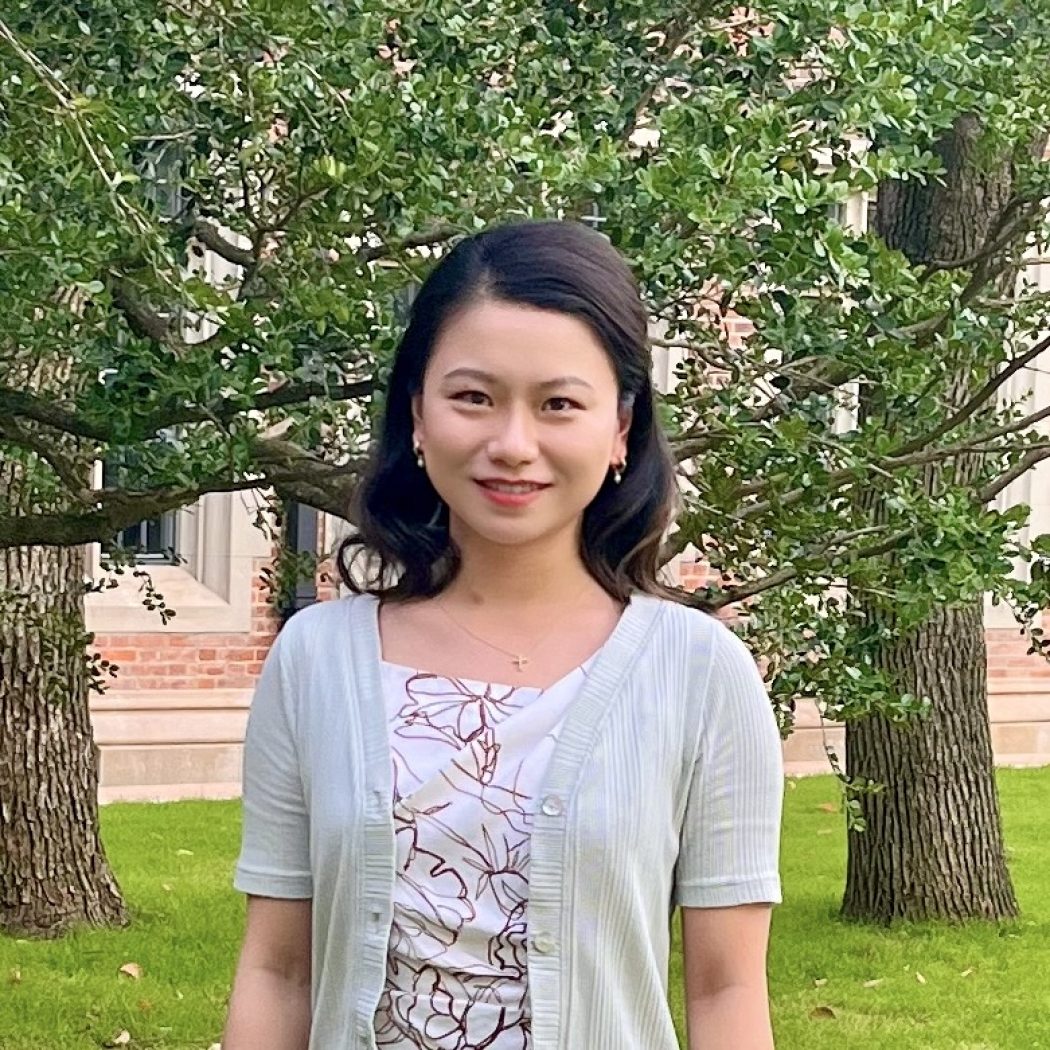
Siyao Li is an Assistant Professor of International Affairs at the University of Pittsburgh's School of Public and International Affairs (GSPIA) and an affiliated faculty member in the Department of Political Science. She holds a PhD in Political Science from the University of Pennsylvania (2022) and a Master’s in Statistics from The Wharton School. Her research focuses on the politics of foreign direct investment (FDI), trade, and business-government relations, particularly in weak institutional environments and China's political economy. She employs mixed methods, including statistical analysis and survey experiments, to study technology assets, intangible property protection, and the interplay of geopolitics with economic policies.
Education includes a PhD in Political Science from the University of Pennsylvania and a MA in Statistics from Wharton. Previously, she was a GPEP Predoctoral Fellow at Georgetown University's Mortara Center for International Studies (2020-2021). Currently, she serves as a non-resident Center Associate at the University of Pennsylvania's Center for the Study of Contemporary China.
Her research interests emphasize technology-driven economic interactions, state competition in the global economy, and the resurgence of geopolitics in international trade. She also explores how firms secure property rights in unstable regimes, with a focus on intangible assets like technology.
- Scientific Awards:
- Recipient of the International Studies Association's IPE Best Graduate Student Paper award.
In advising and grants, she has mentored students through her fellowship at Georgetown and currently engages with graduate and undergraduate education in GSPIA. She teaches courses on International Political Economy (PIA 2301) and Contemporary China's role in it (PIA 2474). Her work is published in Journal of Conflict Resolution, Journal of European Public Policy, and Political Science Research and Methods, reflecting her expertise in empirical political economy and institutional analysis.
She collaborates with interdisciplinary networks like the Critical Political Economy Research Network (CPERN), though no specific lab or team is explicitly mentioned. Her academic profile highlights engagement with current debates on China’s global economic strategies and the evolving IPE landscape.