معرفی
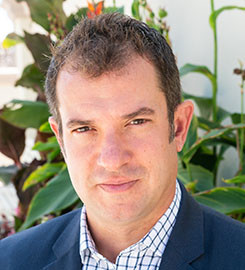
Shawn Miller is an Associate Teaching Professor in the Department of Chemistry & Biochemistry at the University of Notre Dame, located in Jordan Hall of Science, Notre Dame, IN. He holds a Ph.D. in Organic Chemistry from the University of California, Irvine (2014) and a B.S. in Chemistry from the University of Connecticut (2009). His academic career includes prior roles as a Lecturer at Utah State University (2016–2022) and a Teaching-Research Postdoctoral Fellow at the University of Illinois Urbana-Champaign (2014–2016).
- Ph.D. in Organic Chemistry, University of California - Irvine, 2014
- B.S. in Chemistry, University of Connecticut, 2009
Shawn Miller's primary research and professional interests lie in organic chemistry and chemical education, with a strong emphasis on pedagogical innovation and teaching excellence in undergraduate chemistry instruction. His work integrates evidence-based teaching practices to enhance student learning in organic chemistry, a traditionally challenging subject for science majors. His expertise bridges the gap between chemical content and educational methodology, contributing to the scholarship of teaching and learning (SoTL) in the chemical sciences.
The available information does not include any peer-reviewed research articles authored by Shawn Miller. Therefore, no trends or thematic patterns in publication output can be analyzed at this time.
Shawn Miller has been recognized with several prestigious teaching awards for his contributions to education. These include:
- Empowering Teaching Excellence Master Teaching Award, Utah State University, 2020
- Teaching Scholar Award, Utah State University, 2020
- Outstanding Contributions to the Chemistry Department Award, University of California - Irvine, 2013
- Most Promising Future Teacher in Organic Chemistry Award, University of California - Irvine, 2012
While there is no explicit mention of graduate student advising or external research grants in the provided text, his role as an Associate Teaching Professor and prior postdoctoral fellowship focused on teaching suggest that he may mentor undergraduate researchers and contribute to curriculum development and educational grants related to STEM education. His position emphasizes instructional leadership rather than traditional research supervision.
No specific laboratory, research team, or collaborative research group is mentioned in the available content. Given his focus on teaching, it is likely that his contributions are centered within instructional teams, course development committees, or educational outreach initiatives rather than a research laboratory setting.